
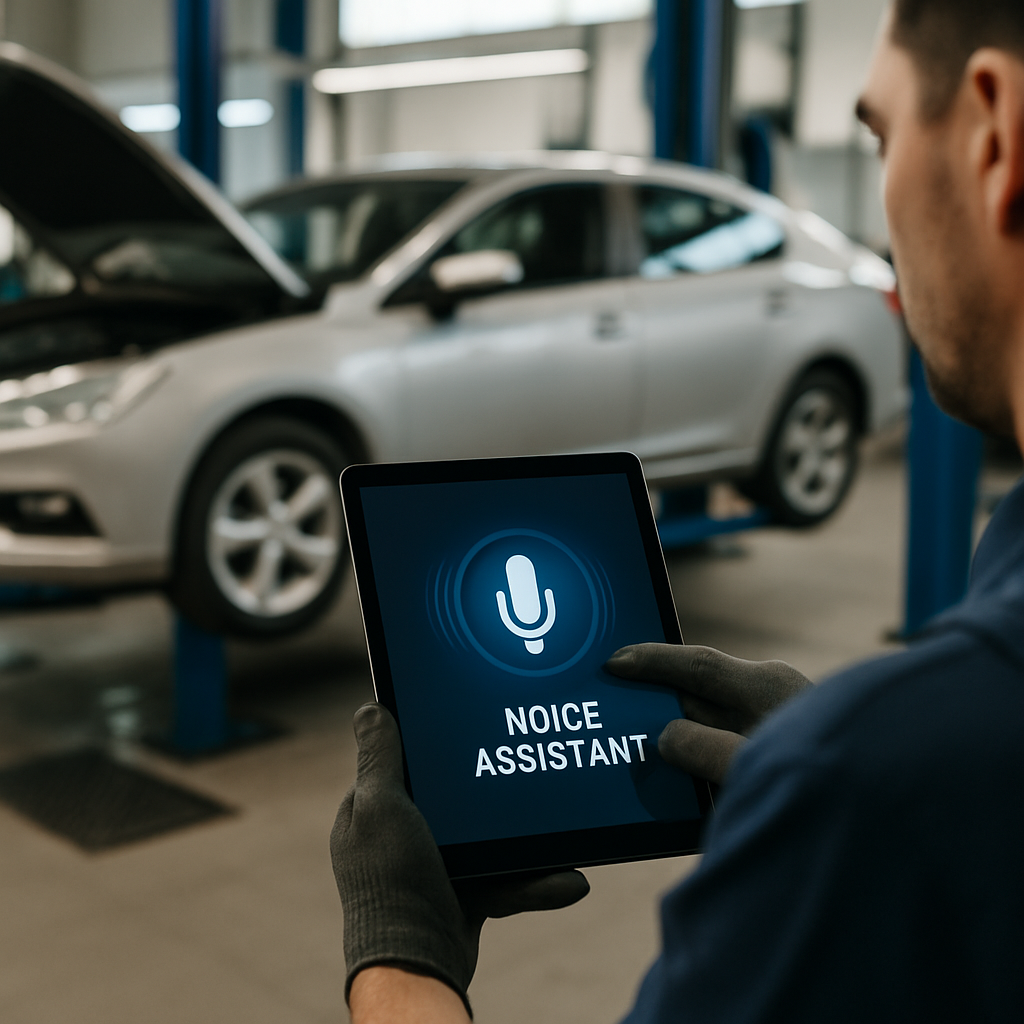
Walk into any busy auto repair shop at 8 a.m. and you’ll see the same scene: phones ringing, a customer at the counter holding keys, another one waiting for a callback about a brake estimate, and a service advisor trying to type up a work order with grease on his fingers. That chaos is exactly where an ai voice assistant earns its keep. It answers calls, books appointments, pulls up vehicle history, and lets your techs stay elbows-deep in a transmission instead of chasing paperwork.
I’ve spent the last couple of years watching independent shops adopt voice tech, and the change is bigger than people expect. This isn’t a chatbot in a sidebar. It’s a hands-free, always-on assistant that actually understands "the customer with the blue F-150 needs an oil change Tuesday at 3." Below are seven wins that make the biggest difference, backed by what I’ve seen work in real bays.
1. Booking Appointments Without Tying Up a Human
The average shop misses roughly 30% of inbound calls during peak hours. That’s lost revenue every single day. An ai voice assistant answers on the first ring, checks your calendar, asks the right qualifying questions (vehicle make, symptom, preferred day), and drops the appointment right into your shop management system.
What surprises most owners is how natural the conversations sound. Modern voice models handle interruptions, accents, and the classic "hold on, let me check with my husband" pause. If the caller wants something the assistant can’t quote, it warms up the lead and pings a human. No one hangs up on hold.
Try running a quick test yourself. Call your own shop at lunch. If it rings more than three times, you’ve already got a problem the ai voice assistant can fix.
2. Faster Check-Ins at the Service Counter
The check-in ritual is where shops lose 10 to 15 minutes per customer. Grabbing mileage, VIN, contact info, describing the symptom, writing it up. A voice-driven kiosk or advisor-facing mic lets you talk through the intake while the ai voice assistant transcribes and populates the ticket.
One shop in Ohio I worked with cut check-in time to under four minutes. The advisor just talks to the customer normally: "Sounds like a squeal on cold starts, right side." The system tags the concern, links it to the RO, and even suggests likely causes based on prior tickets for that vehicle.
That’s the same principle behind good micro-interaction UI wins, just applied to voice: reduce friction at every tiny step and the whole day flows better.
3. Hands-Free Diagnostics in the Bay
Techs shouldn’t need to wipe their hands, walk to a laptop, and Google torque specs. With a Bluetooth headset and a shop-tuned ai voice assistant, they can say "torque spec for a 2019 Camry front caliper bolt" and get an answer in two seconds. Same for TSBs, wiring diagrams, and fluid capacities.
The bigger win is documentation. Techs hate writing notes. When they can dictate "found leaking valve cover gasket, oil pooling on exhaust manifold, recommend replacement" straight into the RO, the story of the repair actually ends up in the file. That protects the shop on comebacks and warranty claims.
4. Follow-Ups and Reminders That Actually Happen
Every shop owner knows the money is in the follow-up. State inspections, brake fluid flushes, timing belts at 90k, six-month post-repair check-ins. Almost no one has the discipline to make those calls consistently.
The ai voice assistant does. It runs through the callback list every afternoon, leaves voicemails in a real voice, texts follow-ups, and books the appointment when someone picks up. On the marketing side, this pairs beautifully with paid outreach. If you’re already running Facebook Ads tactics for local sales, the voice assistant closes the loop by actually converting those inbound calls into booked jobs.
Small shops using this consistently see a 15 to 25% bump in return visits within six months. That’s not hype, that’s just what happens when nobody falls through the cracks.
5. Multilingual Service Without Hiring for It
Auto repair customers come from every background. If your shop serves a big Spanish-speaking community, a Vietnamese neighborhood, or a Punjabi trucking crowd, you probably already know the pain of language gaps. Hiring bilingual staff is great when you can, but often you can’t.
A modern ai voice assistant handles at least a dozen languages fluently, live. The customer speaks Spanish, the system responds in Spanish, and the advisor sees the English transcript on screen. Estimates, follow-ups, and reminders all go out in the customer’s preferred language automatically.
I’ve seen this single feature move a shop’s Google review count from a trickle to a flood, because customers finally feel like they belong there.
6. Smarter Estimates Using Shop History
Here’s where the ai voice assistant gets genuinely clever. When a caller says "my 2016 Civic is making a grinding noise when I brake," the assistant doesn’t just book an appointment. It pulls historical data from your shop, looks at similar tickets, and gives the advisor a probable diagnosis and a starting price range before the car even arrives.
That means the estimate on the phone is more accurate, customers hear a realistic number, and your close rate goes up. It’s the same data-driven mindset behind smart IT vendor management wins at the enterprise level, just aimed at the counter instead of the boardroom.
You do have to be careful with the data side. Customer records, VINs, phone numbers, and payment info all need to be handled properly. The NHTSA guidance on connected vehicle data is worth reading if you’re integrating any voice system with telematics or OBD data.
7. After-Hours Coverage That Doesn’t Cost a Salary
Most shops close at 6. But customers shop for repairs at 9 p.m., after the kids are in bed. If your voicemail is the only thing answering, they’re already calling the next shop on Google.
An after-hours ai voice assistant picks up, handles the conversation like a real advisor, books the appointment for tomorrow, and sends the customer a confirmation text. Some shops report 20 to 30% of their weekly bookings now come in outside business hours. That’s revenue that used to walk straight to the competition.
Pair this with a decent website (a lightweight progressive web app is ideal for auto shops because it loads fast on cell service in a parking lot) and you’ve got a shop that never really closes.
Making the ai voice assistant Actually Work in Your Shop
The technology is ready. What trips shops up is implementation. A few things I’d tell any owner before signing a contract:
Start with one workflow. Pick either inbound calls or intake, not both. Prove it works, then expand. Voice systems that try to do everything on day one usually get abandoned by month two.
Get your data clean. If your shop management software has three duplicate records for the same customer, the ai voice assistant will confidently talk to the wrong person. Spend a weekend deduping before you go live.
Train it on your voice. Every shop has its own vocabulary. "Trans flush," "brake job," "the works." The more your assistant learns how your team actually talks, the more natural it sounds to customers.
Set clear handoff rules. There will be calls the assistant shouldn’t handle. A tow-in emergency, a legal complaint, an insurance adjuster. Define those upfront and route them to a human immediately.
Watch the reviews. In the first month, listen back to calls (or read the transcripts) at least once a day. You’ll catch weird phrasing, missed context, and small tweaks that make a huge difference.
Where This Is All Heading
Voice is going to be the default interface for the service counter within a few years. The shops adopting an ai voice assistant now are the ones that will have five years of data and a smooth workflow when their competitors are still fumbling with it. Whether you run a two-bay independent or a 12-bay multi-store operation, the ai voice assistant pays for itself faster than almost any other tech investment you can make right now, and the customer experience jump is something you can literally hear on every call.
Start small, pick one win from this list, and build from there. Your techs will thank you, your advisors will thank you, and your revenue report at the end of the quarter will do the loudest talking of all.
References
- National Highway Traffic Safety Administration, Vehicle Cybersecurity Guidance: https://www.nhtsa.gov/road-safety/cybersecurity
- Automotive Service Association, Industry Reports on Shop Operations: https://asashop.org
- Cox Automotive, Service Industry Study: https://www.coxautoinc.com

