
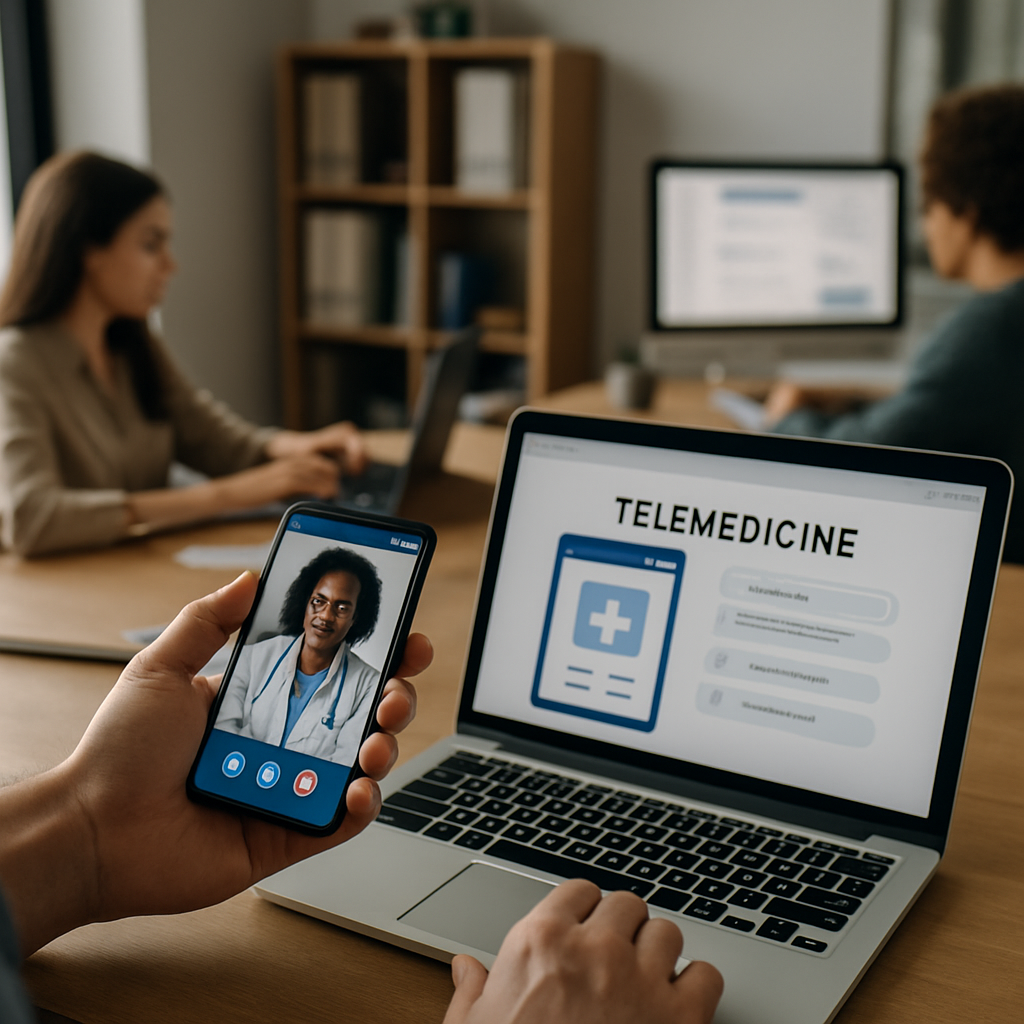
The telemedicine app features that keep patients coming back are almost never the flashy ones. They’re the small, quiet details that make a sick person at 9pm on a Tuesday think, "okay, this actually works." That’s the bar. And most virtual care apps still fumble it.
I’ve watched clinics spend six figures on a slick video platform, then lose patients because scheduling took eleven taps. Loyalty in healthcare isn’t built on marketing budgets. It’s built on trust, convenience, and follow-through. Below are nine telemedicine app features that consistently move the needle, based on what real patients actually use (and complain about) in production apps.
1. Fast, Frictionless Video Consultations
Video quality is table stakes, but connection speed is where loyalty is won. If a patient waits more than fifteen seconds for the call to start, their confidence in your clinic drops. Measurably.
Good telemedicine app features include adaptive bitrate streaming, low-bandwidth fallback to audio, and a "test your connection" screen before the appointment. Twilio, Vonage, and Agora all handle the heavy lifting well. Pick one and tune it aggressively for mobile networks in rural areas, because that’s where telemedicine actually saves lives.
Bonus: let the doctor see the patient’s connection status too. Nothing kills a consult faster than both parties saying "can you hear me?" for two minutes.
2. One-Tap Appointment Booking
Booking should feel like ordering an Uber, not filing taxes. Show available slots, let the patient pick a provider (or auto-match by symptom), confirm. Done.
I’ve seen clinics require patients to fill out a fourteen-field form before they can even see the calendar. That’s a loyalty killer. Pull existing profile data, pre-select the last provider they saw, and only ask new questions when medically necessary. Same principles behind good salon booking app features apply here: reduce taps, respect the user’s time, and confirm instantly.
3. Smart Symptom Checker With AI Triage
An AI triage flow does two things at once: it reassures anxious patients and routes them to the right level of care. Someone with chest pain gets flagged for urgent review. Someone with a mild rash gets pointed to a scheduled consult or a self-care article.
This is one of the telemedicine app features where a well-trained model earns its keep. Pair the symptom checker with your EHR so past conditions inform the triage. Clinics using AI predictive analytics for early risk detection have already seen this play out in reduced ER visits and better chronic care follow-through.
Just don’t oversell it. Make clear the AI is a guide, not a diagnosis. Patients respect honesty here.
4. Prescription Management and E-Refills
If your app can send the prescription directly to the patient’s preferred pharmacy, you’ve won half the loyalty battle right there. Add refill reminders, one-tap refill requests, and a running medication history, and patients will genuinely feel taken care of.
Integrate with Surescripts or a regional equivalent for e-prescribing. Show cost estimates when possible. Flag drug interactions before the doctor even hits send. These are the details that make telemedicine app features feel like real healthcare instead of a Zoom call with a stethoscope.
5. Secure Messaging Between Visits
Video calls aren’t the only touchpoint. Async messaging between visits is where ongoing relationships get built. Post-op questions, medication side effects, "is this normal?" moments, these small check-ins keep patients from bouncing to a competitor.
Build it with proper encryption, HIPAA-compliant storage, and clear response-time expectations ("your care team replies within 4 hours"). Set boundaries too. Patients need to know messaging isn’t for emergencies. A big red "call 911" banner helps.
6. Integrated Health Records and Wearable Data
Patients hate re-explaining their history. Every. Single. Time. If your app pulls from Apple Health, Google Fit, or connected devices like Dexcom and Fitbit, the provider walks into the call already informed.
This kind of integration overlaps a lot with what makes clinic patient portal features actually get used. Show trends, not just raw numbers. A blood pressure graph over three months tells a story a single reading can’t.
Also, respect the data. Let patients see exactly what’s shared, with whom, and give them one-tap revocation. Trust compounds.
7. Multi-Language and Accessibility Support
Roughly 20% of U.S. households speak a language other than English at home. If your app is English-only, you’re losing a fifth of your potential loyal patients before you even start.
Real multi-language support means translated UI, translated intake forms, and ideally on-demand medical interpreters for the video call itself. Add screen reader compatibility, larger font options, and captions for hearing-impaired patients. According to the WCAG 2.2 guidelines published by the W3C, most of these upgrades are straightforward to implement if you plan them in from day one.
Accessibility isn’t a checkbox. It’s a loyalty strategy.
8. Transparent Billing and Insurance Verification
Nothing torpedoes patient trust like a surprise bill three weeks later. The best telemedicine app features handle billing up front: real-time insurance eligibility checks, clear copay display before the appointment starts, and itemized receipts inside the app.
Let patients save payment methods, split bills across HSA and credit card, and download superbills for out-of-network reimbursement. If your app can also estimate the cost of common follow-up procedures, even better. Patients remember the clinic that was honest about money.
9. Personalized Follow-Ups and Care Reminders
The visit doesn’t end when the video call ends. Automated but personal follow-ups (medication reminders, lab result notifications, wellness check-ins) are where casual patients turn into loyal ones.
Segment your notifications carefully. A diabetic patient needs different reminders than someone recovering from an ankle sprain. Use push notifications sparingly, SMS for anything urgent, and email for summaries. Every message should feel like it came from their care team, not a marketing funnel. The retention psychology behind good mobile navigation and app retention applies directly: relevance beats frequency, every time.
Putting the Telemedicine App Features Together
Individual telemedicine app features matter, but the loyalty magic happens when they’re stitched together into a single, seamless experience. A patient books in two taps, gets triaged by AI, has a smooth video call, receives an e-prescription, messages a nurse two days later about a side effect, and gets a friendly follow-up text a week after that. Every interaction reinforces "this clinic has its act together."
That’s what patient loyalty actually looks like in 2026. It’s not one killer feature. It’s the compounding effect of nine or ten small ones done well.
What to Watch Out For
Two common traps. First, feature bloat. Every one of these telemedicine app features should exist because it solves a real patient problem, not because a competitor has it. Ship fewer things, but ship them polished.
Second, compliance shortcuts. HIPAA, HITECH, and state-level telehealth rules aren’t optional, and the penalties for cutting corners are brutal. Build compliance into the architecture from day one. Retrofitting it later costs three times as much and never really works cleanly.
Also, measure what matters. Patient retention rate, appointment completion rate, message response time, prescription refill rate. Vanity metrics like downloads mean nothing if nobody comes back for their second visit.
Final Thoughts
The clinics winning at virtual care in 2026 aren’t the ones with the biggest budgets. They’re the ones who obsess over the boring details, the small friction points, the twenty-second delays that make patients silently churn. The nine telemedicine app features covered here are proven, but proven only matters if you actually build them thoughtfully and iterate based on how real patients use them.
If you’re planning a build or a rebuild, start with two or three of these and get them right before adding more. And talk to your patients. Constantly. They’ll tell you exactly which telemedicine app features are worth investing in next.
References
- W3C, "Web Content Accessibility Guidelines (WCAG) 2.2", https://www.w3.org/TR/WCAG22/
- HHS.gov, "HIPAA and Telehealth", https://www.hhs.gov/hipaa/for-professionals/special-topics/telehealth/
- American Medical Association, "Telehealth Implementation Playbook", https://www.ama-assn.org/practice-management/digital/telehealth-implementation-playbook
- HealthIT.gov, "Patient Engagement Playbook", https://www.healthit.gov/playbook/pe/

