
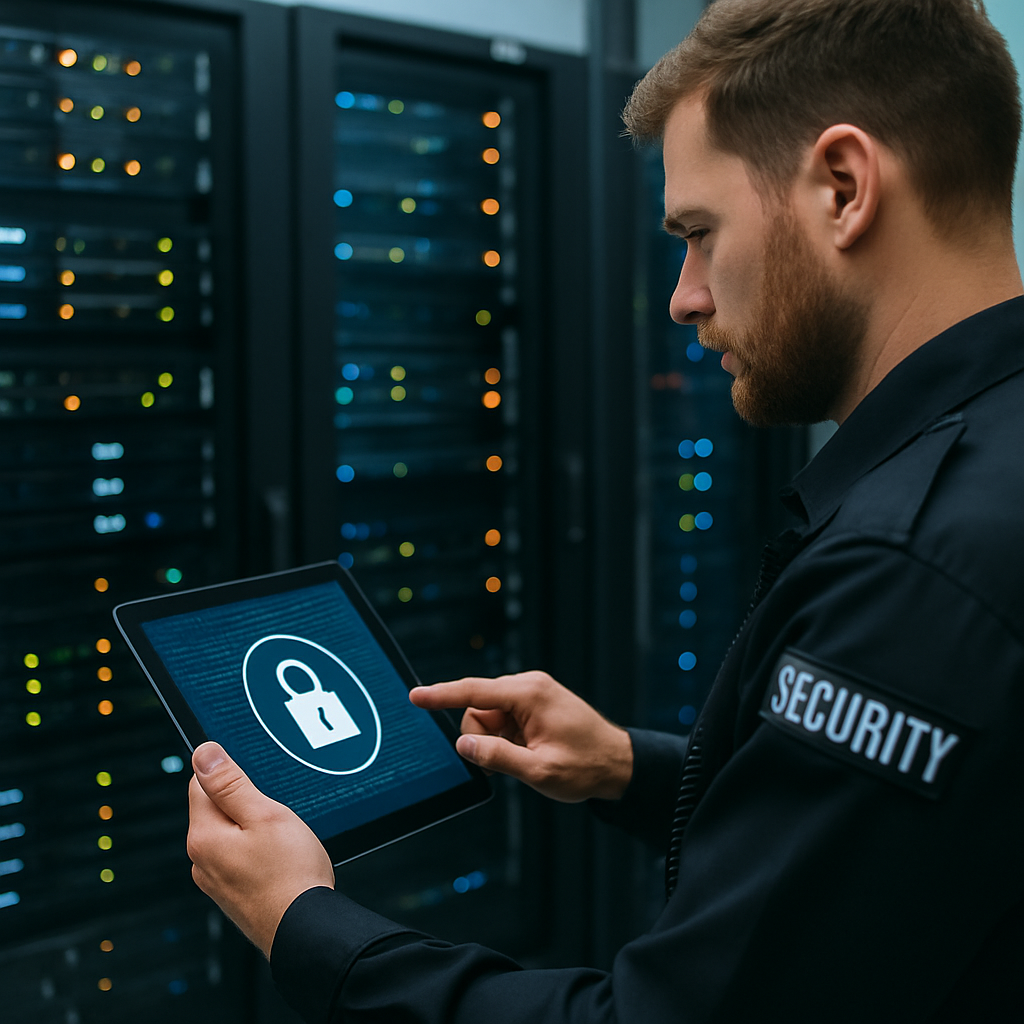
Retail endpoint security has quietly become the difference between a store that keeps trading through the holidays and one that spends December on the phone with lawyers. Point-of-sale terminals, warehouse scanners, backroom PCs, kiosks, and the manager’s iPad are all endpoints. Every one of them is a door. And attackers in 2026 are picking those locks faster than most retailers realize.
If you run a store, a chain, or a franchise group, this is for you. Below are seven wins that actually move the needle, drawn from what’s working right now for retailers we talk to. No fluff, no theory, just what to fix first.
Why Retail Endpoint Security Broke in 2026
Retail has more endpoints per employee than almost any other industry. A single mid-sized store might run 4 registers, 3 tablets, 2 handheld scanners, a back-office desktop, a signage player, and half a dozen personal phones connected to guest Wi-Fi. That’s before you count the smart shelves and RFID readers.
Attackers noticed. Ransomware crews now target retail specifically during Q4, when downtime hurts most and payouts come faster. The average breach cost in retail hit $3.48 million according to IBM’s Cost of a Data Breach Report, and the recovery time keeps stretching.
Retail endpoint security isn’t just an IT checkbox anymore. It’s operational insurance.
Win #1: Lock Down POS Terminals With EDR, Not Just Antivirus
Traditional antivirus on POS systems catches yesterday’s threats. Endpoint Detection and Response (EDR) watches behavior. Big difference.
A POS terminal that suddenly starts making outbound connections to a random IP in Eastern Europe? EDR flags it in seconds. Antivirus shrugs because no signature matched. Modern retail endpoint security starts here.
Look for EDR tools built for low-resource devices. Your registers can’t afford a 40% CPU hit during Black Friday. Sentinel, CrowdStrike Falcon, and Microsoft Defender for Business all have lightweight retail modes worth testing.
Pro tip: run EDR in learning mode for two weeks before enforcement. You’ll be surprised how much weird legitimate traffic your POS software generates.
Win #2: Segment Guest Wi-Fi From Everything That Matters
This one costs almost nothing and stops entire attack categories. Your customer Wi-Fi should never, ever touch the same network as your registers, back office, or camera system.
I’ve walked into stores where the guest network shared a subnet with the DVR. One compromised laptop in the food court and the whole store is on the six o’clock news.
Use VLANs. Use separate SSIDs. Put the POS network on its own switch if you can. The best retail endpoint security stack in the world can’t save you if your architecture is flat. This ties into the same segmentation logic we covered in our piece on multi-cloud strategy for law firms, just applied to physical stores.
Win #3: Patch Handheld Scanners and IoT Devices (Yes, Really)
Handheld scanners are computers. So are your smart shelves, digital signage boxes, and self-checkout kiosks. Most run some flavor of Android or embedded Linux, and most retailers have never patched them.
Build a quarterly IoT patch cycle. Assign one person to own it. Track firmware versions in a spreadsheet if you don’t have an MDM yet.
The 2025 breach at a European grocery chain started with an unpatched shelf-edge label printer. The attacker moved laterally into the ERP system in under six hours. Retail endpoint security has to include every device with a chip, not just the obvious ones.
Win #4: Zero Trust for Staff Devices and BYOD
Store associates use their phones. Managers check email on personal laptops. Pretending otherwise gets you breached. Instead, assume every device is hostile until proven otherwise.
Zero Trust in retail means:
- Multi-factor authentication on every admin login, no exceptions
- Conditional access based on device health, not just password
- Session timeouts short enough to matter (15 minutes for POS admin)
- No local admin rights on shared devices
Rolling this out sounds painful. In practice, once staff use it for two weeks, complaints drop to near zero. The trick is a good UX layer, similar to what we described for dark mode UX in mobile apps: security only sticks when it doesn’t fight the user.
Win #5: Kill Phishing at the Endpoint Before It Reaches Your Manager
Store managers are prime phishing targets. They have payment approval authority, vendor access, and enough authority that finance won’t question a rushed request from them.
Endpoint-level email filtering plus browser isolation blocks most credential-stealing pages before they load. Pair that with 15 minutes of quarterly training and a phishing simulation platform like KnowBe4 or Hoxhunt.
We dug deeper into this angle in our post on phishing prevention wins for law firms, and honestly retail has it worse because turnover is higher. New hires get phished more. Bake security into onboarding day one.
Retail endpoint security fails at the human layer more often than the technical one. Train accordingly.
Win #6: Encrypt Everything, Especially the Backroom Laptop
The manager’s backroom laptop has payroll spreadsheets, vendor contracts, inventory forecasts, and probably a saved password to your ecommerce backend. It also gets stolen from parked cars roughly once per district per year.
Full-disk encryption is free. BitLocker on Windows, FileVault on Mac, both flip on with a group policy. There’s no excuse in 2026 for shipping a retail laptop without it.
Add remote wipe capability through Microsoft Intune, Jamf, or Kandji. When a device walks off, you brick it before the thief boots it. That’s a five-figure loss avoided for the cost of a monthly license.
Win #7: Log, Monitor, and Actually Respond
You can have the best tools in retail endpoint security and still lose if nobody reads the alerts. Small chains especially fall into this trap. They buy the shiny stack, dashboards blink red for weeks, nobody notices.
Two options that work:
Option A: Hire or contract a Managed Detection and Response (MDR) service. Expect $8 to $25 per endpoint per month. They watch 24/7 so you don’t have to.
Option B: If you’re bigger, build a small SOC. Two analysts minimum for coverage. Use a SIEM like Elastic or Wazuh to keep licensing sane.
Either way, define what "respond" means. Who calls whom at 2 AM when a register starts beaconing to Russia? Write the runbook before you need it. This kind of operational discipline is exactly what we’ve seen work in IT vendor management for manufacturers too.
Rolling It Out Without Breaking the Store
Don’t try all seven wins in one quarter. You’ll burn out staff and probably break something during a busy shopping weekend.
Suggested order:
- Weeks 1 to 2: Network segmentation and Wi-Fi cleanup
- Weeks 3 to 6: EDR deployment on POS and back office
- Weeks 7 to 8: MFA and Zero Trust for admin accounts
- Weeks 9 to 12: IoT patching cadence, encryption, and MDR onboarding
- Ongoing: Phishing training, quarterly reviews
Budget realistically. A 50-store chain should expect $80,000 to $150,000 in year one for a solid stack, then roughly 60% of that annually. Compared to a $3.48M breach, that’s a rounding error.
What to Look for in a Vendor
Not all endpoint tools understand retail. Ask three questions before signing anything:
- Do you support offline POS operation when the internet drops?
- What’s your CPU and RAM footprint during high-transaction periods?
- Can you protect legacy Windows 10 IoT LTSC devices? (Most retail POS still runs it.)
If they hesitate on any of those, keep shopping. The PCI Security Standards Council publishes vendor guidance that’s worth reading before you commit.
Wrapping Up
Retail endpoint security in 2026 isn’t about buying more tools. It’s about picking the right seven wins and executing them consistently, from the register to the backroom laptop to the manager’s phone. Segment your networks, run real EDR, patch the boring devices, and make sure someone is actually watching the alerts.
Do those things, and you’ll spend Q4 selling instead of explaining a breach to your board. That’s the whole game.
If you want help planning or deploying any of this, our team at KuerySoft does retail endpoint security assessments and rollouts across North America. Reach out and we’ll map your current gaps in about a week.
References
- IBM Security. "Cost of a Data Breach Report." https://www.ibm.com/reports/data-breach
- PCI Security Standards Council. "PCI DSS v4.0 Guidance." https://www.pcisecuritystandards.org/
- CISA. "Retail and Hospitality Sector Cybersecurity Guidance." https://www.cisa.gov/
- Verizon. "2025 Data Breach Investigations Report." https://www.verizon.com/business/resources/reports/dbir/

