
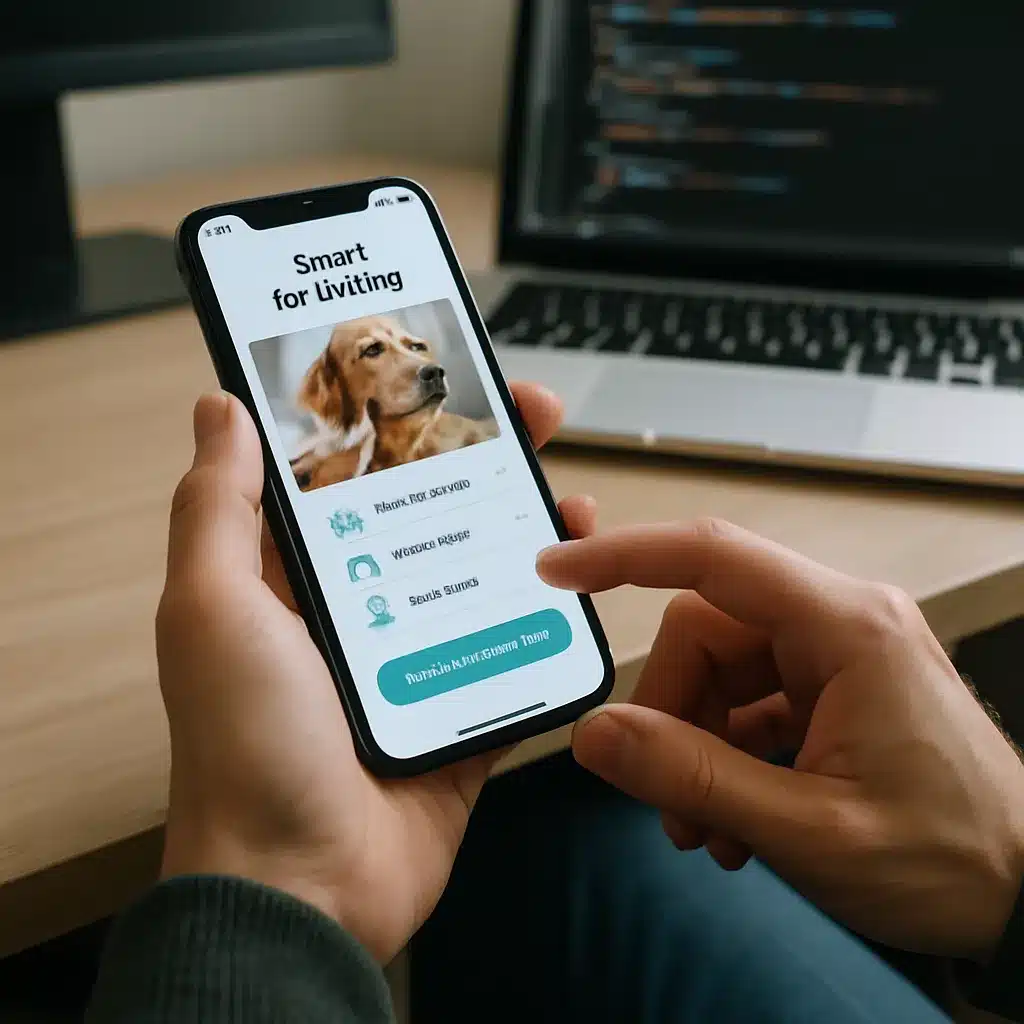
If you want to build a pet grooming app that owners actually open twice a week (not just once a year when the dog smells like a swamp), you have to think like a tired dog parent at 9pm on a Tuesday. That’s the real user. Not a design critic, not a tech reviewer. Someone who just realized Bella is due for a bath and the next slot has to be Saturday morning or life falls apart.
Most pet grooming app projects fail because founders treat them like glorified booking forms. They aren’t. A good pet grooming app is part scheduler, part health record, part loyalty system, and part reassurance machine. Let’s walk through how to actually build one people love, not just download.
Start With the Owner’s Real Problem, Not the Groomer’s Workflow
Here’s a trap I’ve watched three startups fall into: they interview the salon owner, build the whole app around salon workflow, and ship it. The groomer loves it. The pet owner uninstalls after one use.
A pet grooming app lives or dies on the owner side. The grooming shop will tolerate a clunky dashboard if it fills their calendar. The owner won’t tolerate a confusing booking screen for even thirty seconds. So interview both sides, but build owner-first.
Spend time with at least ten pet parents before writing a single line of code. Ask weird, specific questions. "What do you do when your usual groomer is booked?" "Have you ever switched groomers, and why?" "Do you know when your dog’s last nail trim was?" The answers will reshape half your feature list.
The Features a Pet Grooming App Actually Needs
Every pet grooming app pitch deck I’ve seen lists twenty features. Owners want maybe seven of them to work really well. Here’s the short list that moves the needle:
Pet profiles with photos and quirks. Name, breed, coat type, allergies, bite history, favorite treats, and a note field like "scared of the dryer, use low setting." This is also what makes switching groomers painless, which is a huge trust signal.
Smart booking with real inventory. Not a form that emails the shop. Real availability, locked to actual groomer skill (that doodle takes 3 hours, not 1), with buffer time baked in.
Rebooking in two taps. If someone grooms every six weeks, the app should know. Suggest the next slot before they ask. This single feature probably doubles retention.
Photo updates during the appointment. A quick "before and after" or a mid-groom selfie. Owners share these on Instagram. Free marketing, and emotional glue.
Health and vaccine reminders. Rabies due? Flea treatment overdue? Owners genuinely forget. This earns loyalty.
Transparent pricing. No "call for quote" nonsense. Breed plus coat condition plus add-ons equals price. Show it before checkout.
Tipping and loyalty built in. Groomers remember who tips. Owners remember who gives perks. If you want deeper feature inspiration from an adjacent space, our breakdown of proven pet care app features that drive owner loyalty covers the retention patterns that cross over nicely.
Pick the Right Tech Stack for a Pet Grooming App
The stack decision is less about trends and more about what your team can ship and support. For a cross-platform pet grooming app serving a few hundred shops in year one, you have two sane choices.
Flutter and React Native both work. I lean Flutter for pet grooming app projects because the camera handling and animation smoothness feel better out of the box, and groomers love uploading photos. But React Native wins if you already have JavaScript people on staff. We dug into this exact tradeoff in our piece on Flutter vs React Native for startup apps if you want the longer argument.
For the backend, keep it boring. Node or Django with PostgreSQL. Stripe for payments. Twilio for SMS reminders (owners open texts, not push notifications). Firebase or Supabase for real-time updates when the groomer marks "Bella is ready for pickup."
Don’t overbuild. I’ve seen seed-stage founders burn six months on microservices for an app with 400 users. One well-structured monolith will carry you to 50,000 bookings a month, easily.
Design the Booking Flow Like a Human Wrote It
The booking flow is where most pet grooming app projects quietly die. Four screens max. Pet, service, time, confirm. That’s it.
Pre-fill everything you can. If someone booked a full groom for Bella last time, offer that as the default. Let them change it in one tap. Don’t make them scroll through fourteen service types every single visit.
Show the groomer’s name and photo on the booking screen. Pet owners build relationships with specific humans. "Book with Sarah" converts way better than "Book Full Groom." It also reduces no-shows, because people feel accountable to a person, not a brand.
And please, for the love of golden retrievers, make the cancellation flow painless. Hiding the cancel button doesn’t reduce cancellations. It just makes people uninstall and never come back. Clear policy, one tap, done.
Build Trust With Smart Notifications and Updates
Pet owners are anxious. That’s not a flaw, it’s the whole emotional center of this market. Your pet grooming app should actively reduce anxiety at every touchpoint.
Send a "we’ve got Bella, she’s doing great" text when the appointment starts. Send a photo halfway through if possible. Send a "ready for pickup" alert the second she’s done. Three messages, each one releases a small hit of relief for the owner. That’s how you build daily emotional loyalty.
On the automation side, you don’t need anything fancy to pull this off. The same patterns we described in automating dental appointment reminders with AI apply almost directly. Appointment reminders, rebooking nudges, review requests, all triggered by status changes in your database.
Just don’t spam. Three well-timed messages beats twelve. Watch your opt-out rate like a hawk.
Handle Payments, Tipping, and No-Shows Properly
Payments inside a pet grooming app are where you earn or lose the shop owners. Groomers hate chasing money. Collect a card at booking, charge on completion, and route tips to the groomer, not the shop account. Stripe Connect handles the split cleanly.
For no-shows, charge a reasonable fee (20 to 50 percent is standard) but only after a clear warning on the booking screen. According to the American Pet Products Association, pet services spending keeps climbing year over year, so your margins are real if you don’t bleed them on empty slots.
Loyalty is easy to overthink. A simple "10th groom free" or "20% off birthday month" works better than a complicated points system. Pet owners aren’t optimizing for rewards math. They want to feel appreciated.
Launch Small, Measure Everything, Then Grow
Don’t launch citywide. Pick one neighborhood, three or four grooming shops, and run the pet grooming app in beta for 60 days. Watch where people drop off. Watch which notifications get ignored. Watch which groomers get rebooked.
The metrics that actually matter: rebooking rate within 8 weeks, no-show rate, average rating per groomer, and photo-share rate. If rebooking is above 55 percent and no-shows under 8 percent, you have a real product. Scale from there.
Marketing is almost all local in year one. Partner with vets, dog trainers, and pet stores. Run a referral credit. Get groomers to mention the app at checkout. Paid ads come later, after word of mouth proves the retention is real.
Final Thoughts
A great pet grooming app isn’t a booking tool with a pet theme pasted on. It’s a trust system. The owner is handing you their family member for two hours, and your app is the only window into that experience. Design around that emotion and the rest gets easier.
Build the pet grooming app around the owner’s anxiety and the groomer’s calendar, in that order. Keep the stack boring, the booking flow short, and the notifications warm. Do that, and you won’t just have downloads. You’ll have the pet grooming app that owners actually keep on their home screen next to their banking app, because it genuinely makes their week easier.
References
- American Pet Products Association, Industry Trends and Stats: https://www.americanpetproducts.org/research-insights/industry-trends-and-stats
- Stripe Connect documentation: https://stripe.com/docs/connect
- Twilio Messaging best practices: https://www.twilio.com/docs/messaging/guides/best-practices

