
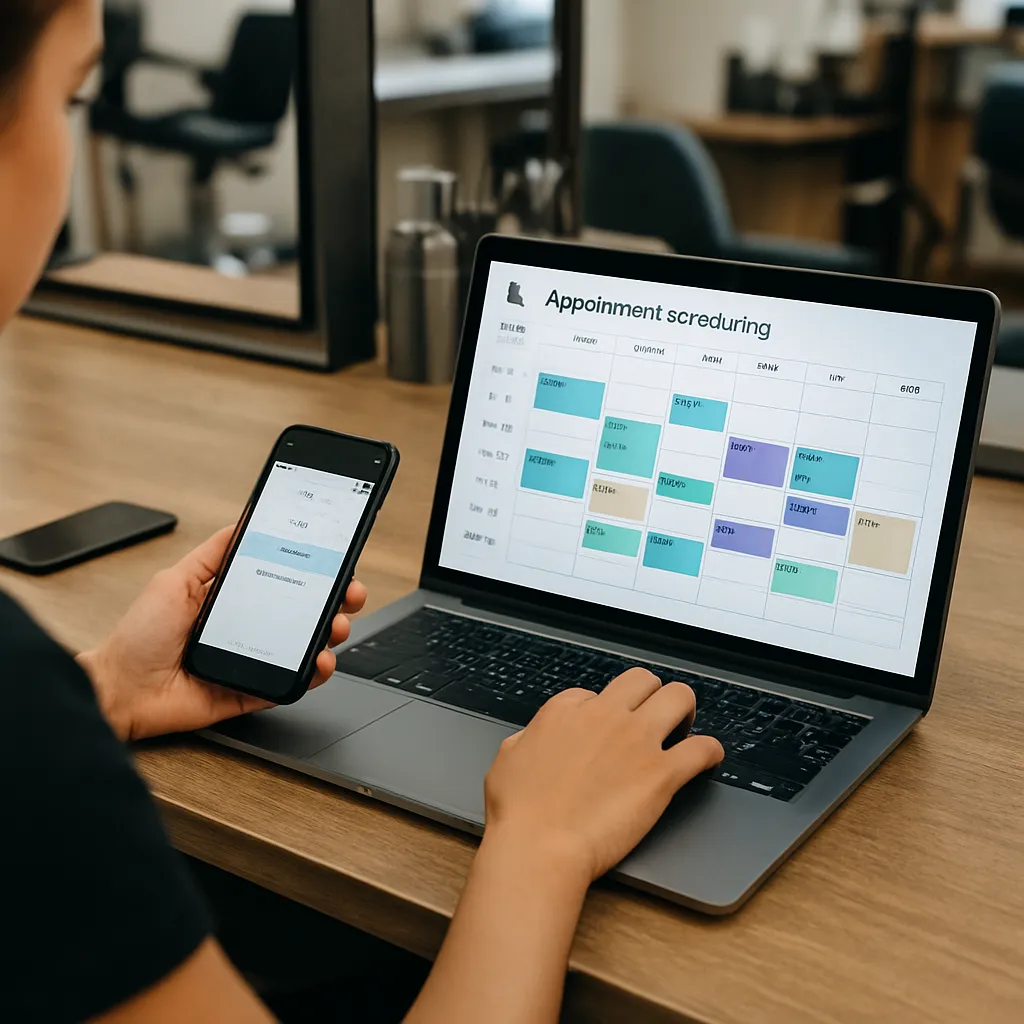
Running a salon in 2026 without AI appointment scheduling feels a bit like cutting hair with dull shears. You can still do it, but the results are messy and slow. Between last-minute cancellations, stylists sitting idle, and clients ghosting on their color appointments, the old booking flow just does not hold up anymore.
The good news? Smart scheduling tools have gotten really good. Not "chatbot that sort of works" good, but genuinely useful, revenue-saving good. Here are seven wins salon owners are actually seeing this year, plus what to look for when you pick a system.
Why AI Appointment Scheduling Is a Big Deal for Salons
Salons live and die by their calendar. A missed 90-minute balayage slot is not just lost revenue, it is a stylist paid to scroll TikTok. That is where AI appointment scheduling changes the math.
Modern platforms use booking history, weather, local events, and even client behavior to predict who will show, who will cancel, and when to squeeze in a walk-in. According to a McKinsey report on AI in services, businesses that adopt AI-driven customer operations see meaningful jumps in both revenue and retention.
For salons, that translates to fuller chairs and calmer front desks. Let me walk you through the seven wins that make the biggest difference.
Win 1: Predictive No-Show Reduction
No-shows are the silent killer of salon margins. A traditional reminder text helps a little, but AI appointment scheduling takes it further by scoring each booking’s risk.
The system looks at things like: has this client canceled twice before, did they book at 2am on a Friday, is a snowstorm coming? High-risk bookings get extra nudges, a deposit request, or a confirmation call. Salons using this approach are reporting no-show drops of 30 to 50 percent.
That is not a small number. On a $180 color appointment, one saved no-show a day pays for the software many times over.
Win 2: Smart Stylist Matching
Not every client vibes with every stylist. Some want quiet, some want gossip, some only trust one person with their curls. Older booking systems just showed available slots. AI appointment scheduling can suggest the right stylist based on service history, product preferences, and even review sentiment.
New client wants a silk press? The system points them to the stylist who has done 200 of them, not the one who mostly does buzz cuts. Better match, better result, better tip.
It also spreads bookings more evenly across your team, which keeps morale up. Nobody wants to watch one chair get slammed while another sits empty all Saturday.
Win 3: Dynamic Pricing and Slot Optimization
Airlines have been doing this for decades. Salons are finally catching up. AI appointment scheduling can shift prices or offer small discounts based on demand, similar to how dynamic pricing works in hospitality.
Tuesday 11am is dead? The system automatically offers 15 percent off to loyal clients. Saturday 3pm is your golden slot? Full price, no negotiation, and a waitlist. The AI figures out the sweet spot for each time block based on your actual data, not gut feeling.
I have seen a mid-size salon in Denver add roughly $4,000 a month just by filling in dead weekday hours this way. Same staff, same rent, more revenue.
Win 4: Conversational Booking Across Channels
Clients want to book from wherever they already are. Instagram DMs, Google Business Profile, WhatsApp, your website, a voice call at 10pm. AI appointment scheduling handles all of these channels with the same brain.
A client can text "can I get roots done Thursday after 5" and the bot checks availability, confirms the stylist, sends a deposit link, and adds it to the calendar. No human touches it. The front desk stays free to focus on the people actually in the salon.
This is the same idea we covered in our piece on AI voice assistants for hotels, just tuned for beauty services. The pattern works because customers hate waiting on hold, and AI never sleeps.
Win 5: Rebooking Prompts That Actually Convert
Here is a stat that surprised me: most clients want to rebook, they just forget. A good AI appointment scheduling tool knows that a color client usually returns in six weeks, a haircut in four, and a lash fill in three.
Two days before that window closes, the system sends a personalized message. Not "book now!!" but something like "Hey Priya, your last balayage was 5 weeks ago. Want to grab your usual Saturday slot with Alexa?" One tap, done.
Rebooking rates jump from around 35 percent to well over 60 percent with this approach. It also frees your team from the awkward "so when do you want to come back?" sales pitch at checkout.
Win 6: Real Waitlist and Cancellation Magic
Every salon has a cancellation list scribbled somewhere. Nobody actually calls it. AI appointment scheduling replaces that mess with an instant matching engine.
When a slot opens up, the system checks the waitlist, ranks clients by service fit, loyalty, and how quickly they usually respond, then blasts a first-come offer to the top three. Slot filled in minutes, often within seconds.
The best part? It works overnight and on Sundays. A 6am cancellation for a 9am color gets rebooked before your receptionist has finished their first coffee.
Win 7: Data That Actually Tells You Something
Old salon software gave you reports. Lots of them. Most owners never opened them. AI appointment scheduling flips this by surfacing insights, not spreadsheets.
You log in and see: "Your Wednesday 2pm slot has been open 6 of the last 8 weeks. Consider making it a walk-in hour." Or "Client retention drops sharply after the third visit with stylist Marco. Worth a check-in." That kind of specific, useful nudge is what separates modern tools from bloated legacy systems.
If you are also thinking about a full digital presence upgrade, our guide to fitness app features that drive engagement has some good ideas that translate well to salon apps too, especially around loyalty and push notifications.
Picking the Right AI Appointment Scheduling Platform
Not all tools are created equal. When you evaluate options, look for a few must-haves:
- Native integrations with your POS, payments, and marketing tools
- SMS and WhatsApp support out of the box, not as a $50 add-on
- Deposit and no-show fee handling with clear client-facing policies
- Real analytics, not vanity dashboards
- Clean mobile experience for both staff and clients
Also, check how the AI is trained. Some platforms use pooled data from thousands of salons, which is great. Others train per-account, which starts weak but gets better over time. Ask before you sign.
Security matters too. Client data, payment info, and personal preferences all sit in your system. If you want to go deeper on protecting that, our zero trust security guide for dental clinics covers principles that apply just as well to salons.
Rolling It Out Without Chaos
Do not switch everything on a Monday morning. Pick a two-week soft launch. Turn on reminders first, then rebooking prompts, then waitlist automation. Let your team see the wins before you ask them to trust the AI with pricing or stylist matching.
Train your front desk on the override options. AI is smart, but sometimes a regular client just needs a human "of course we’ll fit you in." The best salons treat AI appointment scheduling as a co-pilot, not an autopilot.
Also, tell your clients. A quick Instagram story or email about the new booking experience builds excitement instead of confusion. Most people love the convenience once they try it.
Final Thoughts
AI appointment scheduling is not a shiny extra anymore, it is table stakes for salons that want to grow in 2026. The tools have matured, the ROI is obvious, and the setup is easier than most owners expect. Whether you run one chair or twenty, the seven wins above will pay for themselves within a quarter.
Start with no-show reduction and rebooking prompts, watch what happens to your revenue, then layer in the rest. Your stylists, your clients, and your bank account will all notice the difference.
References
- McKinsey and Company, The State of AI, https://www.mckinsey.com/capabilities/quantumblack/our-insights/the-state-of-ai
- Harvard Business Review, How Retailers Use Personalized Prices, https://hbr.org/2018/11/how-retailers-use-personalized-prices-to-test-what-youre-willing-to-pay

