
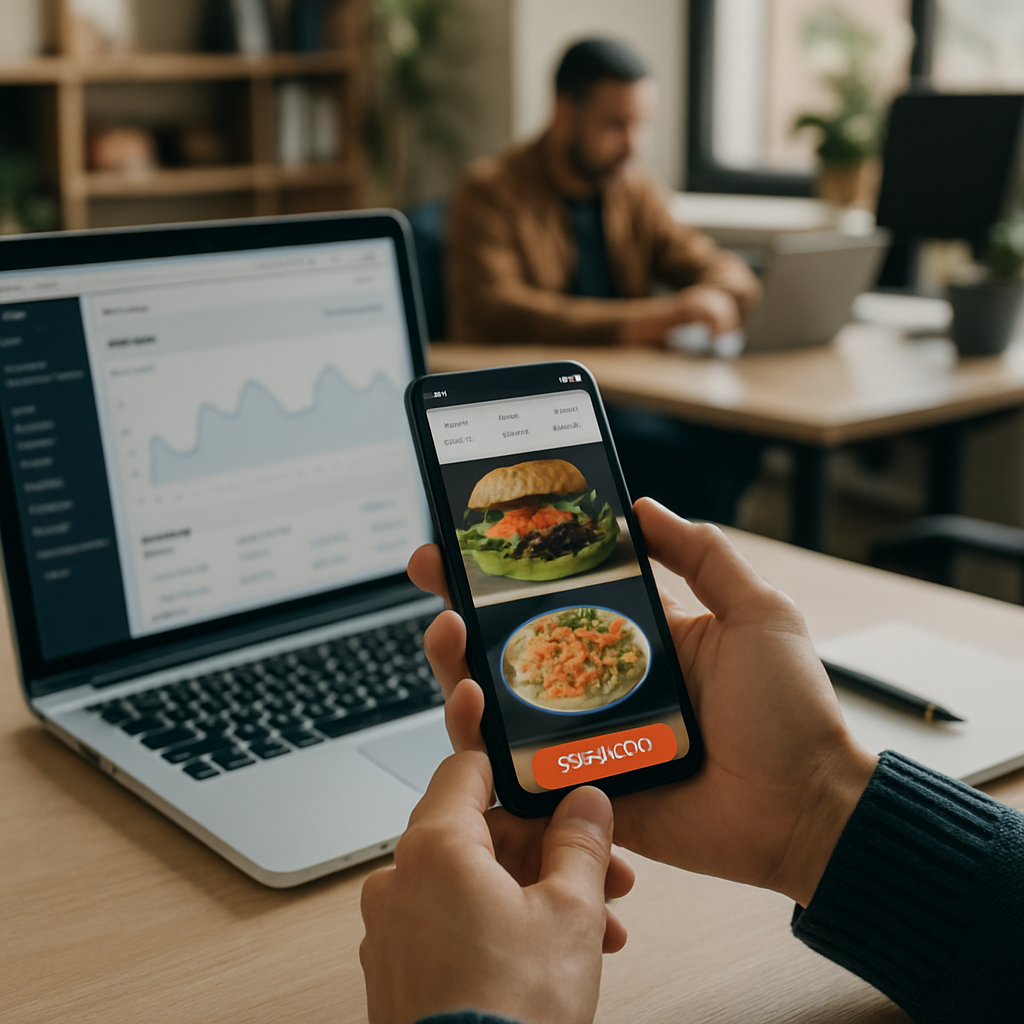
The right restaurant mobile app features can quietly do the work of three extra staff members during a Friday dinner rush. I’ve watched small bistros double their weekly online orders after rebuilding their app with the right mix of speed, personalization, and smart nudges. And I’ve also seen polished apps flop because they tried to do everything except make ordering easy.
So let’s skip the fluff. If you run a restaurant, a ghost kitchen, or a small chain, these are the seven restaurant mobile app features actually moving the needle in 2026. No vanity stuff. Just things that make hungry people tap "Place Order" faster.
Why Restaurant Mobile App Features Matter More Than Ever
The food delivery market is still growing, but the margins on third-party platforms are brutal. According to Statista’s foodservice report, the global online food delivery segment is projected to keep climbing through 2026, and most of that volume is shifting toward direct, app-based channels.
That shift is the whole story. Customers are tired of switching between five delivery apps. Restaurants are tired of giving away 25 to 30 percent per order. A branded app sits between those two pain points, but only if the restaurant mobile app features inside it are genuinely useful.
A pretty app with a clumsy checkout is just a billboard. The features below are the ones that actually convert taps into tickets.
1. One-Tap Reordering and Saved Favorites
Repeat customers are gold. The fastest way to lose them is asking them to rebuild their order from scratch every Tuesday night.
A one-tap "Order Again" button on the home screen pulls in the last three or four orders with the exact same modifications. Add a "Favorites" section where they can save a custom build (think "Sarah’s usual"), and you’ve removed every reason for them to second-guess.
I’ve seen this single feature push repeat order rate up by 30 to 40 percent in family-run pizza spots and poke bowl chains. The tech behind it is simple. The behavioral payoff is huge.
2. Smart Push Notifications That Don’t Feel Spammy
Push notifications are powerful and also the fastest way to get uninstalled. The trick is timing and relevance.
Send a lunch nudge at 11:45 a.m. only to users who’ve ordered lunch before. Send a "rainy day, free delivery" alert only to users within 3 miles when the local forecast triggers it. Send a rewards reminder when someone is one visit away from a free entree.
If you want a deeper playbook on this, we wrote a whole guide on push notification tactics that drive smart app engagement. The short version: segment your audience, respect quiet hours, and tie every notification to a clear, time-bound offer.
3. AI-Powered Menu Recommendations
This is where 2026 restaurant mobile app features finally feel modern. A recommendation engine that learns from order history, time of day, weather, and even local trends can boost average ticket size by 15 to 25 percent.
A customer who always orders the chicken bowl at lunch? Show them a paired drink and a side they’ve never tried, framed as "People who love the chicken bowl also love this." Don’t just suggest random upsells. Make it feel like the app knows them.
The backend doesn’t need to be exotic. A trained recommendation model on a basic cloud setup works fine for most independent restaurants. If you want a sense of how lightweight AI can plug into operations, our piece on AI agent use cases transforming smart workflows walks through similar logic for service businesses.
4. Frictionless Checkout With Multiple Pay Options
If checkout takes more than 15 seconds, you’re leaking orders. Period.
Apple Pay, Google Pay, saved cards, split payments for group orders, and a guest checkout option for first-timers should all be one tap away. Promo codes need to autofill from in-app banners. Tips should default to smart amounts based on order size.
A few things I’d nail down here:
- Address autocomplete using device location, not manual typing
- A clear delivery fee and tax breakdown before the final tap
- The ability to switch between pickup, dine-in, and delivery without restarting the order
- Buy-now-pay-later for large catering orders (yes, even for a $180 family meal)
Every extra field is friction. Every extra second is a cart abandonment risk.
5. Real-Time Order Tracking With Honest ETAs
People don’t get angry when food is late. They get angry when they don’t know when it’s coming.
A real-time tracker showing "Preparing", "Out for delivery", and "5 minutes away" with a live map satisfies the same psychological itch that Uber and Amazon scratch. And if delays happen, the app should proactively push an update, not wait for the customer to open it again.
Pair this with a clean, honest ETA. Customers will forgive a 35-minute estimate. They will not forgive a 15-minute promise that turns into 45.
6. Built-In Loyalty and Referral Programs
Standalone loyalty cards are dead. Punch cards in a leather wallet are a museum exhibit. The loyalty program needs to live inside the same app where the order happens.
A good setup looks like this. Every dollar spent earns points. Points unlock free items, not vague "perks". Birthdays trigger a free dessert. Referring a friend gives both people a discount on their next order. And the rewards balance is visible on the home screen, not buried four taps deep.
Restaurants combining loyalty with smart checkout often see 60 percent of revenue come from the top 20 percent of app users. The math compounds fast. And since you own the data, you’re not handing customer insights to a third-party delivery platform.
This same logic applies to the website side of things. We covered it in detail in our breakdown of restaurant website UI design wins that boost orders, and the principles carry over.
7. Group Ordering and Scheduled Orders
Two underrated restaurant mobile app features that quietly print money: group ordering and scheduled orders.
Group ordering lets a team or family build a single order from multiple devices. Office lunch orders, birthday parties, Friday night family meals. One person pays, but five people contribute their picks. The average ticket on a group order is often 4 to 6 times higher than a solo order.
Scheduled orders let a customer place a Thursday lunch order on Sunday night. This is gold for catering, breakfast spots, and any restaurant near offices. It also smooths kitchen load during peak hours, which means fewer mistakes and faster real-time orders.
Both features are technically straightforward. They mostly require a clear UI and a kitchen system that can accept future tickets.
How to Prioritize These Restaurant Mobile App Features
You don’t need all seven on day one. Start with one-tap reordering, frictionless checkout, and order tracking. Those three alone will outperform 80 percent of restaurant apps on the market.
Add loyalty in month two. Layer in smart push notifications once you have a few hundred users to segment. Bring in AI recommendations once your order history is rich enough to train on. Group ordering and scheduling come last, but they unlock the biggest tickets.
And budget realistically. A custom-built app with these restaurant mobile app features typically runs between $30,000 and $90,000 depending on scope, plus ongoing infrastructure. If that feels heavy, talk to a partner about a hybrid approach using React Native or Flutter on a serverless backend. Speaking of which, our notes on serverless architecture wins to slash cloud costs explain why this combination keeps monthly bills predictable for small chains.
Final Thoughts
Restaurant mobile app features in 2026 aren’t about flashy animations or AR menus that nobody uses twice. They’re about removing friction, rewarding loyalty, and making the next order feel inevitable.
Pick the three that match where your restaurant is today. Build them well. Measure repeat order rate, average ticket size, and uninstall rate every month. Then layer in the rest. The restaurants quietly winning right now aren’t the ones with the biggest apps. They’re the ones whose apps make ordering feel like muscle memory.
References
- Statista, Online Food Delivery Market Outlook: https://www.statista.com/outlook/emo/online-food-delivery/worldwide
- National Restaurant Association, State of the Restaurant Industry: https://restaurant.org/research-and-media/research/industry-statistics/
- Think with Google, Mobile Commerce Trends: https://www.thinkwithgoogle.com/

