
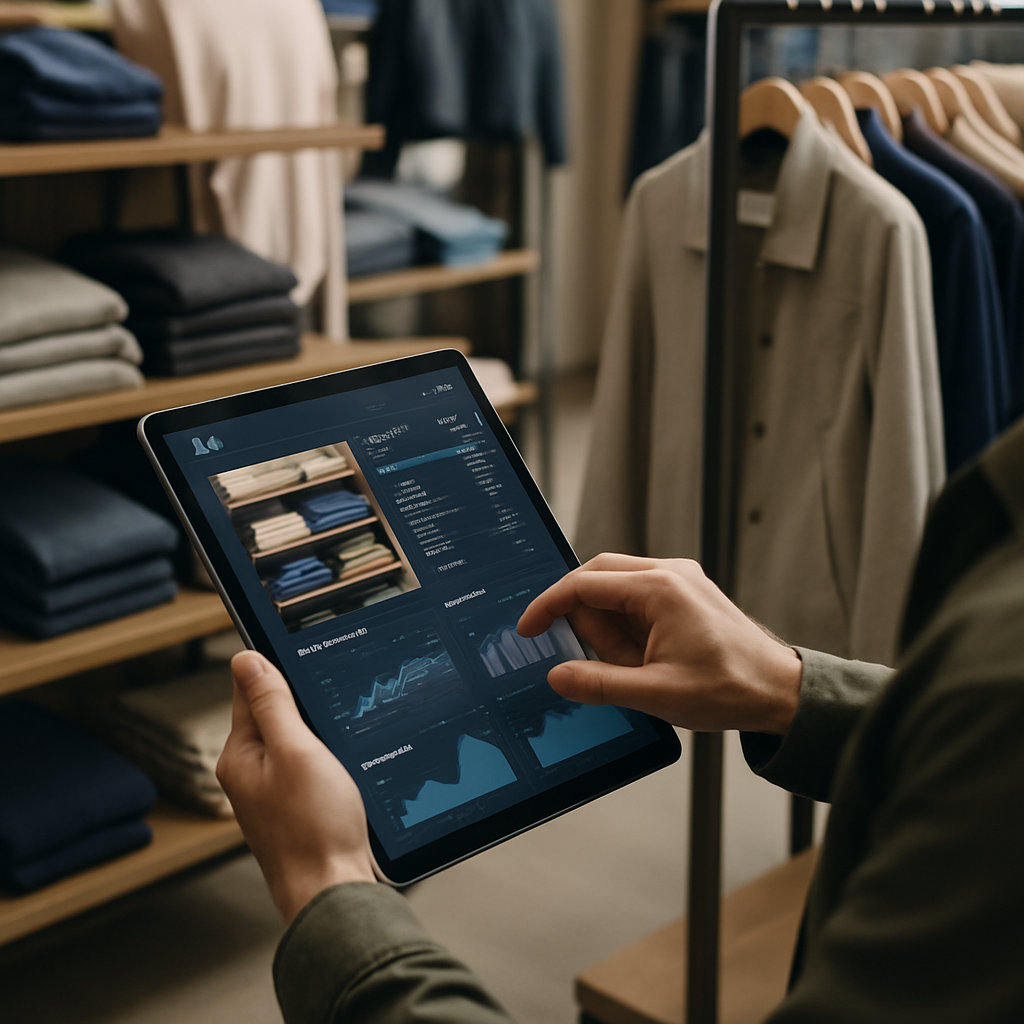
Retailers who cracked AI inventory automation last year are the ones still smiling at their margins in 2026. Everyone else is either drowning in dead stock or apologizing to customers for empty shelves. There isn’t much middle ground anymore.
I’ve spent the last few months talking with store owners, from a three-location boutique in Denver to a mid-sized grocery chain in the Midwest, and the pattern is clear. The ones treating inventory as a spreadsheet problem are losing. The ones treating it as a prediction problem, powered by machine learning, are pulling ahead fast.
So here are seven wins that actually move the needle, with real examples of what’s working right now.
1. Demand Forecasting That Actually Reads the Room
The first big win with AI inventory automation is forecasting that goes beyond last year’s sales numbers. Modern models pull in weather, local events, social trends, competitor pricing, even TikTok virality signals. A boutique owner told me her system flagged a specific dress two weeks before it blew up online. She ordered early, competitors ran out, she cleaned up.
Traditional forecasting looks backward. AI looks sideways and forward. It catches the weird stuff: a heat wave in April, a school schedule shift, a viral recipe that’s about to spike jalapeño demand.
The result is fewer stockouts and less capital sitting in warehouses. According to a McKinsey report on AI in retail supply chains, retailers using advanced forecasting cut inventory costs by 20 to 30 percent while improving service levels.
2. Auto-Replenishment That Doesn’t Need Babysitting
The second win is replenishment that runs itself. Set your thresholds, define your suppliers, and let the system handle the rest. No more Monday morning panic when the manager notices you’re down to two cases of oat milk.
AI inventory automation looks at velocity, seasonality, lead times, and supplier reliability all at once. It orders more of what’s moving and less of what’s slowing. It also nudges you when a supplier starts slipping, before it becomes your problem.
One coffee shop chain I worked with cut their weekly ordering time from six hours to about forty minutes. That’s a full workday reclaimed for every store manager, every week.
3. Smarter Dead Stock and Markdown Decisions
Dead stock is where retail margins go to die. The third win with AI inventory automation is knowing exactly when to discount, by how much, and where.
Instead of the classic 25-off-everything panic sale in January, AI models suggest which SKUs to mark down at each location, in what order, and at what discount depth to preserve the most margin. Some retailers now push different discounts to different stores based on local demand curves.
I’ve seen a home goods retailer recover roughly 40 percent more revenue from clearance items after switching to model-driven markdowns. Same product, same customers, better timing.
4. Loss Prevention Baked Into the Data Layer
Shrinkage still eats around 1.5 percent of retail revenue in 2026, sometimes more in urban stores. The fourth win is using AI to catch discrepancies between what should be on the shelf, what the POS says, and what the cameras see.
When those three data streams disagree, the system flags it. That could mean theft, but it could also mean a receiving error, a mislabeled SKU, or a return that never made it back to the floor. All of these bleed money quietly.
Retailers pairing AI inventory automation with computer vision cameras are catching issues in hours instead of during quarterly counts. The same discipline shows up in adjacent industries too, like the way smart hotels handle IT disaster recovery by monitoring anomalies in real time rather than waiting for the monthly report.
5. Store-Level Personalization of Assortment
Chain retailers used to ship the same mix to every store. That’s over. The fifth AI inventory automation win is assortment tuned to each location’s actual customer base.
Store 14 in a college town sells more energy drinks and frozen pizza. Store 22 in a retirement area sells more decaf and low-sodium options. AI clusters stores by real purchase behavior, not just zip code demographics, and adjusts what each location carries.
The impact is bigger than most owners expect. Sales per square foot go up because shelf space finally reflects what customers want. Waste goes down because you’re not shipping kale to stores where it dies on the shelf.
6. Supplier Intelligence and Risk Scoring
Supply chains still wobble in 2026. Weather, geopolitics, port delays, they all hit inventory hard. The sixth win is AI that scores your suppliers continuously and warns you before things break.
The model tracks on-time delivery, quality claims, price drift, and even news signals about supplier regions. When risk climbs on a critical SKU, the system suggests backup vendors or recommends building a small buffer stock.
This is the kind of foresight that separates retailers who cruised through 2025’s shipping mess from the ones who spent months apologizing. The same predictive muscle applies to other operations too. Take a look at how SaaS startups optimize cloud costs using similar forecasting logic.
7. Unified Inventory Across Online and In-Store
The seventh AI inventory automation win is finally solving the omnichannel headache. One customer, one inventory pool, no more embarrassing "sorry, that item shows online but we don’t actually have it" moments.
AI decides in real time whether an online order ships from a warehouse or a nearby store, based on cost, speed, and current demand at each location. It reserves stock intelligently instead of freezing it the moment an item lands in a cart.
For local retailers competing with Amazon, this is huge. Same-day pickup and two-hour local delivery become realistic because the system actually knows where every unit is.
What AI Inventory Automation Looks Like for Different Retailers
The wins land differently depending on your setup. A single-location boutique gets the biggest bang from demand forecasting and markdown intelligence. A regional grocery chain benefits most from replenishment and assortment personalization. A multi-brand ecommerce operator needs the unified inventory piece more than anything.
For dental offices, clinics, and restaurants stocking supplies rather than retail SKUs, the same principles apply. Predictable consumption, fewer rush orders, less capital tied up in the back room. The tech stack changes but the wins are similar. It’s the same shift I see in how law firms are adopting AI workflow automation to handle repetitive tasks that used to eat billable hours.
Getting Started Without Boiling the Ocean
You don’t need to replace your entire tech stack to see results. Most retailers get meaningful wins by starting with one problem area, usually forecasting or replenishment, and layering on from there.
Pick a category where you have decent data quality and clear pain. Baby formula for a grocery. Denim for a boutique. Espresso beans for a café. Prove the ROI in six to twelve weeks, then expand.
The mistake I see most often is trying to solve everything at once, which usually means solving nothing well. Small wins compound faster than big rewrites.
Also, don’t cheap out on data hygiene. AI models are only as good as the SKU master, the receiving logs, and the POS feeds behind them. Clean data first, models second. Every retailer who skipped this step regretted it within a quarter.
The Bottom Line
AI inventory automation isn’t a futuristic add-on anymore. It’s how competitive retailers operate in 2026, and the gap between adopters and holdouts is widening every month. Fewer stockouts, less dead stock, tighter cash flow, happier customers. Those aren’t projections, they’re what retailers running these systems already report.
Start with one win from this list. Measure it honestly. Then move to the next. Inventory will stop being the thing that keeps you up at night and start being a quiet source of margin you didn’t know you had.
References
- McKinsey and Company. AI-driven operations forecasting in the retail supply chain. https://www.mckinsey.com/industries/retail/our-insights
- National Retail Federation. Retail Security Survey 2025.
- Gartner. Predicts 2026: Supply Chain Technology.
- Deloitte. 2026 Retail Industry Outlook.

