
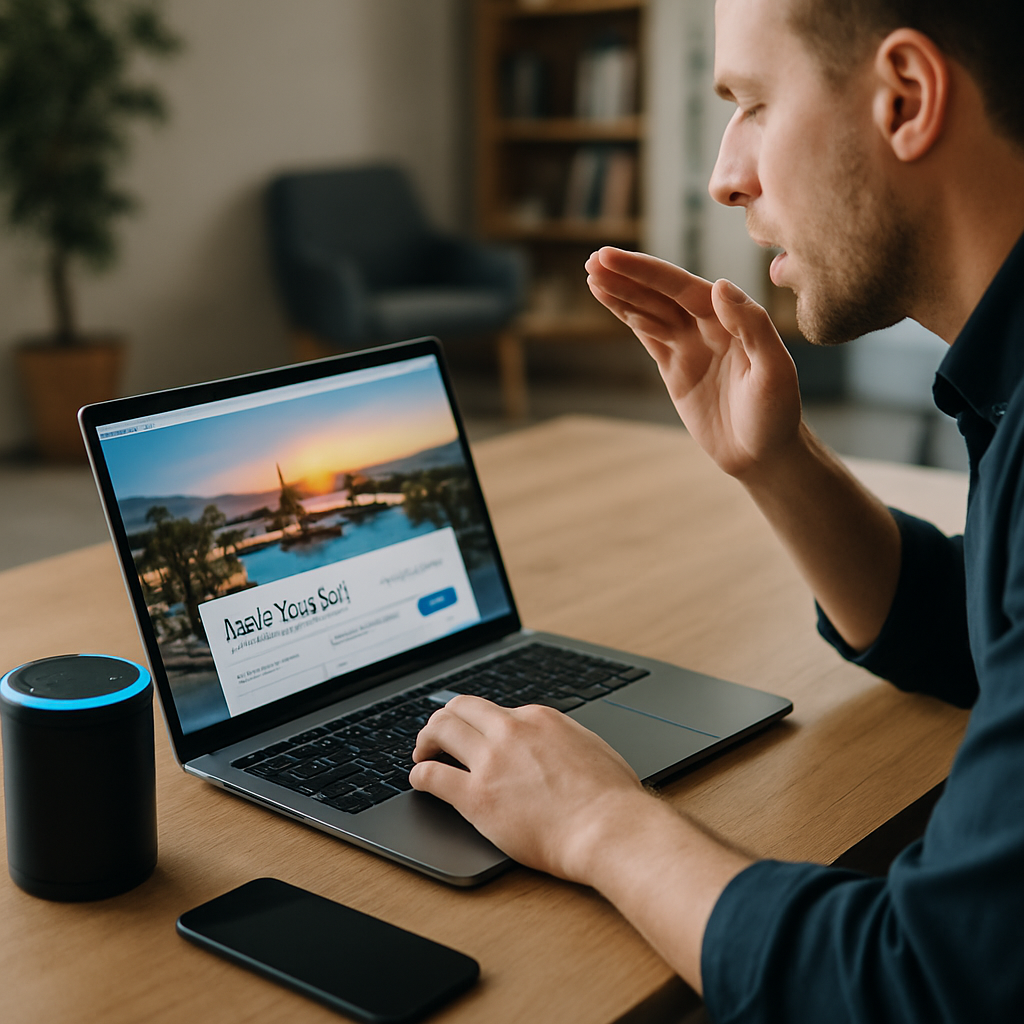
Guests are talking to their phones, their cars, and their smart speakers, so it makes sense that an AI voice assistant is becoming the front desk of the future for hotels. Booking a room through a natural spoken conversation feels easier than tapping through five screens, and in 2026 the tech has finally caught up with the promise. If you run a boutique inn, a mid-size resort, or a growing chain, this shift matters.
I’ve spent time this year watching hoteliers test voice tech with real guests. Some experiments flopped. The good ones? They quietly moved the needle on direct bookings, room service upsells, and repeat stays. Here are the seven wins worth stealing.
Why an AI Voice Assistant Beats a Booking Form
A booking form is a wall of dropdowns. A voice conversation is closer to how humans actually think about travel. "Find me a beachfront room in Cartagena for next weekend under $250" takes about four seconds to say and roughly forty seconds to type through a filter menu.
That gap is where hotels lose people. Abandoned booking flows still hover around 75% industry-wide, and mobile is worse. A well-tuned AI voice assistant closes that gap by treating the search as a conversation, asking one clarifying question at a time, and confirming intent before payment.
The other advantage is memory. A returning guest can say "book me my usual room" and the system pulls their preferred floor, pillow type, and late checkout. Try building that into a form.
Win 1: Natural Language Room Search
The first win is letting guests search the way they speak. No more "2 adults, 1 child, king bed, non-smoking, high floor" as separate fields. The AI parses one sentence and maps it to inventory.
Behind the scenes, this needs a solid intent model paired with your property management system. Cloudbeds, Mews, and Opera all publish APIs that make this doable. The result feels magical to guests, but it’s really just good plumbing.
Bonus: voice searches often include emotional cues. "Somewhere quiet, I’ve had a long week" is a signal your AI can turn into a specific room recommendation rather than a generic list.
Win 2: Voice-Driven Upsells That Don’t Feel Pushy
Every hotelier wants more upsells. Nobody wants to sound like a used car salesman. An AI voice assistant handles this with better timing than most human agents.
At check-in, a quick "Would you like the spa credit added for $25 today only?" converts far better than an email sent three days before arrival. Voice creates urgency without pressure because the guest can just say no and move on.
I’ve seen properties add 8 to 14% to ancillary revenue with this alone. The key is limiting yourself to one offer per interaction. Two feels greedy. Three feels like a phone bank.
Win 3: Multilingual Support Without a Bigger Front Desk
If you host international guests, staffing multilingual reception is expensive. An AI voice assistant handles Mandarin, Spanish, Arabic, Portuguese, and German at 3 a.m. without complaint.
Modern speech models from providers like Google Cloud and OpenAI now handle accents and dialects reliably. The OECD’s tourism outlook notes that cross-border leisure travel is still rebounding in 2026, and language friction remains one of the biggest booking blockers.
You still need a human on standby for tricky moments. But for standard requests (booking changes, wifi codes, breakfast hours), voice AI easily takes 70% of the load.
Win 4: Faster Direct Bookings That Skip the OTAs
OTAs charge 15 to 25% commission. Every direct booking you win back pays for the tech many times over. Voice search is quietly becoming a direct-booking channel because most smart speakers and phone assistants route "book a hotel in Miami" to preferred integrations, not to Expedia.
Setting up your property with Google’s hotel booking APIs and building a voice skill for Alexa or Siri Shortcuts puts your brand in that conversation. Guests who ask their kitchen speaker for a room are, by definition, not shopping around on comparison sites.
Similar to how we covered the shift in Shopify vs WooCommerce for retail owners, hotels have to pick platforms that actually feed the voice ecosystem instead of fighting it.
Win 5: In-Room Voice for Loyalty and Reviews
Once the guest is in the room, an AI voice assistant becomes your concierge, room service order taker, and thermostat controller. Placing a small smart device (or leveraging the guest’s phone through a QR code) means requests get handled in seconds.
Here’s the loyalty piece nobody talks about: the guest who orders extra towels by voice and gets them in six minutes writes a better review than the one who called the front desk and waited twenty. Voice cuts the friction that produces complaints.
Some properties pair this with the same design thinking behind micro-interaction UX, applying small delightful touches (a warm greeting by name, a joke about the weather) that make the tech feel human.
Win 6: Predictive Personalization Before Arrival
Voice AI generates a huge amount of preference data. What guests ask about, how they phrase requests, when they call. Feed that into a recommendation engine and you can personalize the next stay before they even book it.
Example: a guest who asked twice about vegan breakfast options last visit. Next time they interact with your AI voice assistant, it can lead with "We’ve added three new vegan dishes since your last stay, want me to hold a table for morning one?" That’s not creepy. That’s attentive.
This is the same predictive layer we discussed in the piece on AI chatbots for real estate, just applied to hospitality. The data pipelines look nearly identical.
Win 7: 24/7 Support That Actually Scales
The last win is the boring one that finance teams love. An AI voice assistant handles unlimited concurrent conversations. If a flight delay causes 200 guests to want late check-in at once, no problem. If a snowstorm floods your phones with cancellation requests, it handles them all in parallel.
Human agents can’t scale like that. And frankly, the 2 a.m. shift is a rough job for anyone. Letting the AI cover graveyard hours means your team focuses on high-value guest moments during the day.
The economics are straightforward. A cloud-hosted voice AI runs a few thousand dollars a month for a mid-size property. One extra reception hire costs multiples of that.
What It Takes to Deploy an AI Voice Assistant Well
Three things trip up hotels rolling this out. First, bad integration with the PMS. If the voice AI can’t see live inventory, it will quote rooms that don’t exist. Second, no fallback to a human. Guests get frustrated when the AI can’t answer and there’s no escape hatch. Third, treating voice like a marketing gimmick instead of an operational tool.
Do it properly and voice becomes infrastructure, not a novelty. Start with one use case (say, post-booking confirmations by phone), measure it, then expand. The properties that skip the pilot and try to launch everything at once tend to regret it.
Budget for six weeks of tuning after go-live. Real guest conversations will surface edge cases your test scripts missed. That’s normal, not a failure.
Bringing It All Together
An AI voice assistant is no longer a science fair project for hotels in 2026. It’s a working revenue channel, a guest satisfaction lever, and a staffing hedge all in one. The seven wins above (natural search, subtle upsells, multilingual reach, direct bookings, in-room service, predictive personalization, and 24/7 scale) each move a real metric on their own. Combine three or four and you’re running a genuinely modern property.
The hotels that adopt voice thoughtfully this year will still be ahead in 2028. The ones that wait for it to be "proven" will spend the next few years catching up. If you want help scoping out how an AI voice assistant fits your property stack, that’s exactly the kind of build our team does day to day.
References
- OECD Tourism Trends and Policies: https://www.oecd.org/cfe/tourism/
- Google Hotel Booking APIs documentation
- Cloudbeds and Mews API developer portals
- Skift 2026 hospitality technology outlook

