
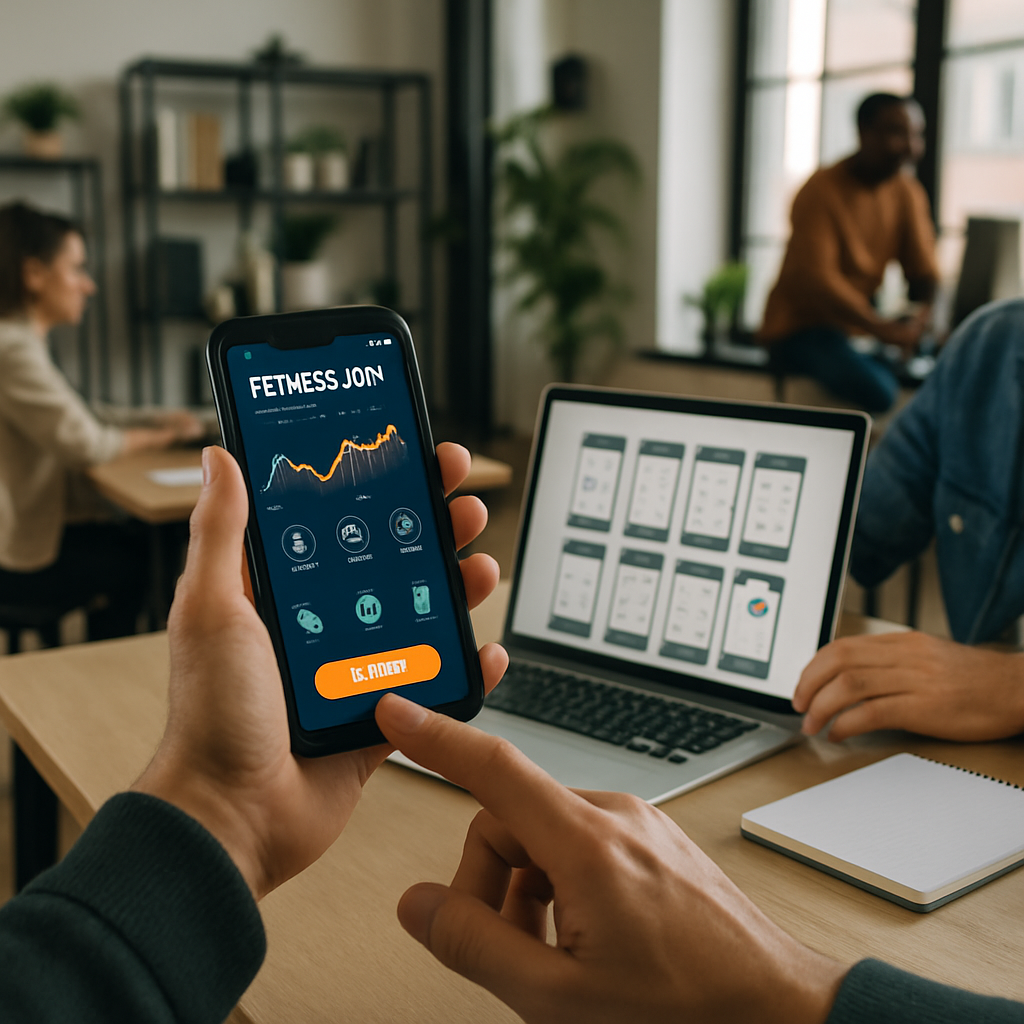
Gym owners keep asking me the same question: why do members download our app, use it twice, then vanish? The honest answer usually comes back to weak fitness app features that treat everyone like a beginner or forget them the moment they log a workout. Loyalty is not built by a slick splash screen. It is built by small, useful moments that keep showing up week after week.
I have spent the last year reviewing what actually keeps members opening a fitness app in month six, not just week one. The patterns are pretty clear. Below are the nine fitness app features I now recommend to every studio, boutique gym, and wellness brand we build for.
Why Fitness App Features Decide Retention in 2026
Here is the blunt truth. Members are drowning in health apps. According to a Statista report on health and fitness app usage, the average user has three installed but only opens one regularly. The one they keep is the one that feels personal.
That is what modern fitness app features have to do. Not more. Not louder. Just more relevant to the person holding the phone. Studios that get this right see churn drop by double digits. Studios that don’t keep buying new members to replace the ones quietly leaving.
1. Adaptive Workout Plans That Actually Learn
Static PDF workout plans should have died in 2019. In 2026, members expect the app to adjust based on how they performed last session, how they slept, and what equipment they have today.
The good adaptive engines watch three things: completion rate, reported difficulty, and recovery data from wearables. If a member skipped Tuesday and reported sore quads on Wednesday, the app should quietly shift Thursday from heavy legs to mobility. That kind of thoughtful behavior is what turns a fitness app into a coach.
2. Wearable Sync That Goes Beyond Step Counts
Almost every fitness app connects to Apple Health or Google Fit. Very few do anything interesting with the data. Pulling in step counts is table stakes.
What builds loyalty is when the app uses heart rate variability, sleep stages, and resting heart rate to make smarter suggestions. Tell a member "your HRV dropped 18 percent, let’s swap today’s HIIT for a walk" and they will trust you forever. That kind of context is one of the most underused fitness app features in the market right now.
3. Social Challenges With Real Stakes
People stick around when their friends are watching. Simple leaderboards get boring by week three. What works in 2026 is small group challenges with real rewards, like a free smoothie, a merch discount, or an extra guest pass.
Keep challenge groups under fifteen people. Big global leaderboards feel impossible. A group of coworkers or neighborhood friends creates the friendly guilt that gets people out of bed. This ties nicely to what we covered in proven pet care app features that drive owner loyalty, where community was also the retention driver.
4. Frictionless Class Booking and Cancellation
If it takes more than three taps to book a spin class, you are losing members. Booking should feel as fast as ordering coffee. Cancellation policies must be visible before the tap, not buried in settings.
Add waitlist automation that texts the next person the second a spot opens. Add a "book my usual" button on the home screen for repeat classes. These tiny fitness app features remove the mental friction that quietly kills habit.
5. In-App Nutrition Logging That Is Not Painful
Manual food logging is the reason most nutrition trackers get abandoned. Barcode scanning, photo recognition, and voice input have to be the default now. Typing "150g grilled chicken" thirty times a week is a losing battle.
Better yet, offer members a simple weekly meal template based on their goal, then let them tap "ate this" or swap items. Perfect logging is a fantasy. Directional logging is what actually helps.
6. Habit Streaks and Micro-Rewards
Duolingo taught the entire app world about streaks, and fitness apps still under-use the idea. A three-day streak feels good. A twenty-eight-day streak feels like identity.
Layer in micro-rewards along the way. Unlock a new workout at day seven. Get a personal message from a trainer at day fourteen. Earn a free class at day thirty. Small dopamine hits at the right moment are some of the most powerful fitness app features you can add, and they cost almost nothing to build. The interaction design principles behind this overlap heavily with what we shared in proven micro-interaction UX wins that drive smart user delight.
7. Personalized Push Notifications, Not Blast Messages
Every app I audit is guilty of this one. Sending the same 6 AM notification to a night-shift nurse and a morning yoga regular is how you get uninstalled.
Personalized push means timing based on the member’s usual workout window, message based on their goal, and frequency based on their engagement level. A quiet member gets a warmer, less frequent nudge. An active member gets a challenge invite. Behavioral segmentation is a fitness app feature that separates the amateurs from the pros.
8. On-Demand Video With Offline Download
Members travel. Members go to hotels with terrible Wi-Fi. If your video library only works while streaming, they will find a competitor who lets them download.
Offer offline downloads with clear file sizes. Let members pick their trainer, workout length, and equipment before hitting play. Bonus points if you save their last-watched position and pick it up on any device. This is one of those fitness app features that sounds boring until a member is stuck in an airport hotel and your app is the reason they still trained.
9. Progress Photos and Body Metrics With Privacy Controls
Photos are the emotional hook. Numbers on a scale lie. A side-by-side photo comparison twelve weeks apart is what makes members cry happy tears and post to Instagram.
Build a private, encrypted photo vault with face-blur options and biometric unlock. Trust matters here. If a member ever suspects their photos could leak, they are gone. This is exactly the level of care we described in proven data encryption wins every smart medical clinic needs, and it applies just as much to fitness data.
Bringing These Fitness App Features Together
None of these nine ideas work in isolation. Adaptive workouts fall flat without wearable data. Streaks feel hollow without social visibility. Great notifications lean on solid segmentation, which leans on clean profile data.
The apps winning in 2026 treat all of this as one connected loop. Data comes in from the wearable and the workout log. The engine decides what the member needs today. The right push shows up at the right time. The member taps in, gets a small win, and the loop repeats.
Building that loop is not trivial, but it is not rocket science either. Start with the two features that hurt your retention most today. Ship them well. Then add the next two.
Final Thoughts on Fitness App Features and Loyalty
Loyalty in 2026 is quieter than most brands expect. It is not big campaigns or viral challenges. It is the sum of a hundred small moments where the app felt like it actually knew the member. The right fitness app features create those moments on repeat.
If you are planning a new build or a serious refresh, pick three of these nine to nail first. Get them right, measure them for ninety days, then expand. That is how you turn a downloaded app into a habit, and a habit into a member who stays for years.
References
- Statista: Health and Fitness App Usage Statistics, https://www.statista.com/topics/1002/fitness-and-activity-apps/
- ACSM Health and Fitness Journal, Worldwide Survey of Fitness Trends 2026
- App Annie State of Mobile Report, Fitness Category Retention Benchmarks

