
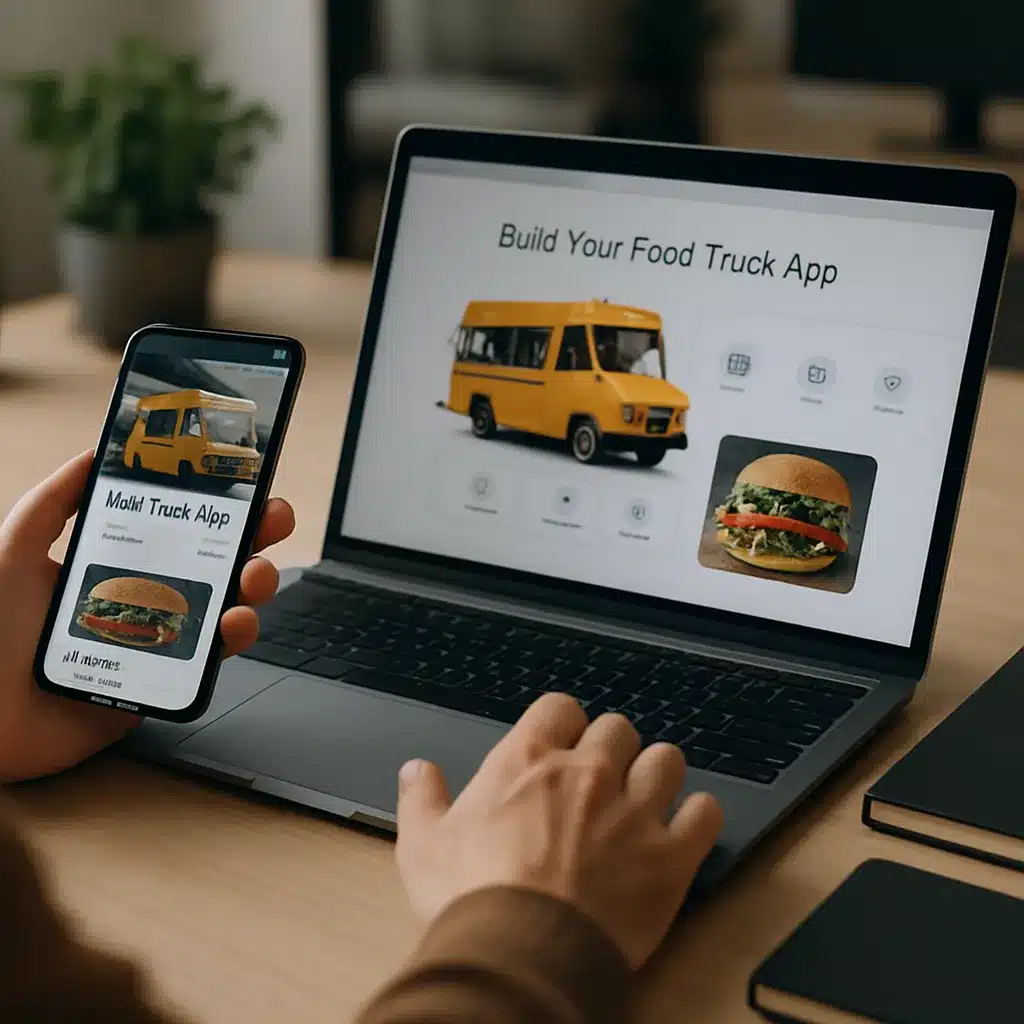
Running a food truck is already a juggling act. You’re prepping, driving, serving, posting on social, and trying to remember if you turned off the propane. Adding a food truck app to the mix sounds like one more thing to manage, but done right, it becomes the quiet workhorse that fills your line before you even park.
I’ve watched owners pour thousands into flashy apps that nobody downloaded twice. I’ve also seen a single trailer in Austin triple weekday sales with a scrappy app that just did three things really well. The difference wasn’t budget. It was design choices.
Let me walk you through what actually works.
Why a Food Truck App Beats a Generic Platform
You could list your truck on a big aggregator and call it a day. Plenty of owners do. The problem is you’re renting someone else’s customer, paying 15% to 30% per order, and competing with every other food truck on their map.
A dedicated food truck app flips that. You own the relationship. You see who ordered what, when, and how often. You can push a lunch notification at 11:15 AM when you pull into a new spot, and the regulars who love your birria will come running.
That ownership compounds. Year two is where the real money shows up, because your repeat customer rate stops leaking into some third party’s algorithm.
The Non-Negotiable Features Every Food Truck App Needs
Here’s where most builds go sideways. Owners get excited and ask for loyalty tiers, AR menus, and gamified punch cards before the basics even work.
Nail these first:
Live location on a real map. Not "we’re near downtown today." A GPS pin that updates when the truck moves. Customers want to know if you’re seven minutes away or if they should give up and eat a sad desk salad.
Pre-order with a time slot. This is the single biggest conversion lever for a food truck app. Someone on their lunch break will absolutely order 20 minutes ahead if it means skipping a 15 minute line.
A menu that actually loads fast. Images compressed, prices current, sold-out items grayed out automatically when your POS runs low. Nothing kills trust faster than someone showing up for the brisket sandwich you ran out of at 11:40.
One-tap reorder. Your top 15% of customers eat the same thing every time. Make it a single button.
Push notifications tied to location. When you cross a geofence into a new neighborhood, your subscribers there get a ping. This alone can double a slow Tuesday.
Everything else, loyalty points, referral codes, catering requests, those are phase two. Ship the core first.
Picking the Right Tech Stack
The tech choice matters more than people think, because food trucks run in weird network conditions. You might be in a parking lot with two bars of LTE while 40 orders are flying in.
For the mobile side, cross-platform frameworks are the sensible choice for most food trucks. If you want a deeper look at the tradeoffs, this breakdown on React Native vs Flutter differences covers what matters for small-team builds. Short version: both work, both ship to iOS and Android from one codebase, and both are cheaper than going fully native.
On the backend, keep it boring. A managed Postgres database, a small Node or Python API, Stripe for payments, Twilio for SMS backups when push fails. Host it on a platform that scales automatically because your weekend lunch rush is nothing like your Tuesday afternoon.
For order routing to your kitchen, use a cheap Android tablet with a loud alert sound. Fancy kitchen display systems are overkill for a truck. A tablet, a receipt printer, and a stable Wi-Fi hotspot handle 200 orders a day without breaking a sweat.
Payments, Taxes, and the Boring Stuff That Breaks Businesses
A food truck app without airtight payment handling is a lawsuit waiting to happen. Use a certified payment processor, never store card data on your own servers, and make sure your developer knows what PCI compliance means. Stripe or Square handle most of this for you, which is why they’re worth the fees.
Tax calculation gets weird when you cross city or county lines, which food trucks do constantly. Your app needs to pull the correct sales tax rate based on current location, not the home address of the business. Services like TaxJar or Avalara plug into most backends and handle this automatically. Skip this step and you’ll owe back taxes you didn’t collect.
Tipping screens matter too. Default suggestions of 15%, 20%, and 25% consistently outperform lower anchors. One truck I know added a 25% default and watched average tips jump 11% in the first month without a single complaint.
Reducing Friction at Every Step
The best food truck app in the world fails if ordering takes more than 90 seconds. Measure every tap.
Guest checkout should be the default. Forcing account creation on a first-time hungry customer is how you lose them. Collect their phone number at payment, send the order confirmation by SMS, and offer to save their info after the sale closes. Reverse the usual flow.
Menu photography is weirdly important. Phone shots in bad parking lot lighting kill appetites. Spend $300 on a food photographer for one afternoon and use those images for two years. The order rate difference is embarrassing.
If you want more ideas on reducing drop-off during checkout, these checkout UX wins for e-commerce conversions apply almost directly to food truck app flows.
Using AI Without Overengineering It
AI is useful for a food truck app in two specific places, and basically nowhere else right now.
First, demand forecasting. Feed last year’s sales, weather, and location data into a simple model and it’ll tell you to prep 40 more tacos on Thursdays when it’s over 75 degrees. That one insight pays for the whole app.
Second, inventory tracking. If you’re running multiple trucks or a commissary kitchen, automating stock levels prevents the dreaded 1 PM "we’re out of chicken" announcement. There’s a solid rundown on how to automate restaurant inventory with AI that scales down nicely for truck operators.
Skip chatbots. Nobody wants to chat with a bot about tacos. They want tacos.
Marketing the App So People Actually Download It
Building a food truck app is the easy part. Getting the download is where businesses stall.
Put a QR code on the window, the receipt, the chalkboard menu, and the side of the truck. Offer a real incentive for the first download, free side, free drink, 10% off, something a hungry person actually wants right now.
Train your window staff to mention it in one sentence: "Next time, skip the line, scan this." That’s it. Don’t let them read a script.
On social, show the app in use. Short clips of someone walking up, grabbing their pre-order, and leaving in 30 seconds. According to recent data from the National Restaurant Association, off-premises ordering continues to grow across the entire food service industry, and food trucks are perfectly positioned to capitalize on it because speed is already in their DNA.
Email the people who ordered once but never came back. A simple "we miss you, here’s $3 off" wins back more customers than any ad spend.
Common Mistakes That Sink Food Truck Apps
A few patterns I see over and over:
Building for every possible feature instead of the three that matter. Launching without real-world testing in bad cell coverage. Ignoring the kitchen workflow and dumping chaos on your cook. Not training staff on the app, so they can’t answer basic questions. Treating the app as a one-time project instead of something that needs small monthly updates.
Fix those and you’re ahead of 90% of the trucks that tried this.
Pulling It All Together
A great food truck app isn’t about having the slickest interface or the most features. It’s about removing the two things that lose you customers every single service: the wait and the uncertainty. Nail live location, pre-ordering, and fast reorders, and your food truck app will quietly become the most profitable employee you ever hired.
Start small. Ship something that does three things perfectly in six weeks, not twelve things poorly in six months. Then listen to what your regulars actually ask for, and build the next round from there. That’s how you end up with a food truck app customers open on purpose, not out of obligation.
References
- National Restaurant Association, Industry Research and Statistics: https://restaurant.org/research-and-media/research/industry-statistics/
- Stripe Documentation on PCI Compliance: https://stripe.com/docs/security
- Google Developers, Geofencing API Overview: https://developers.google.com/location-context/geofencing

