
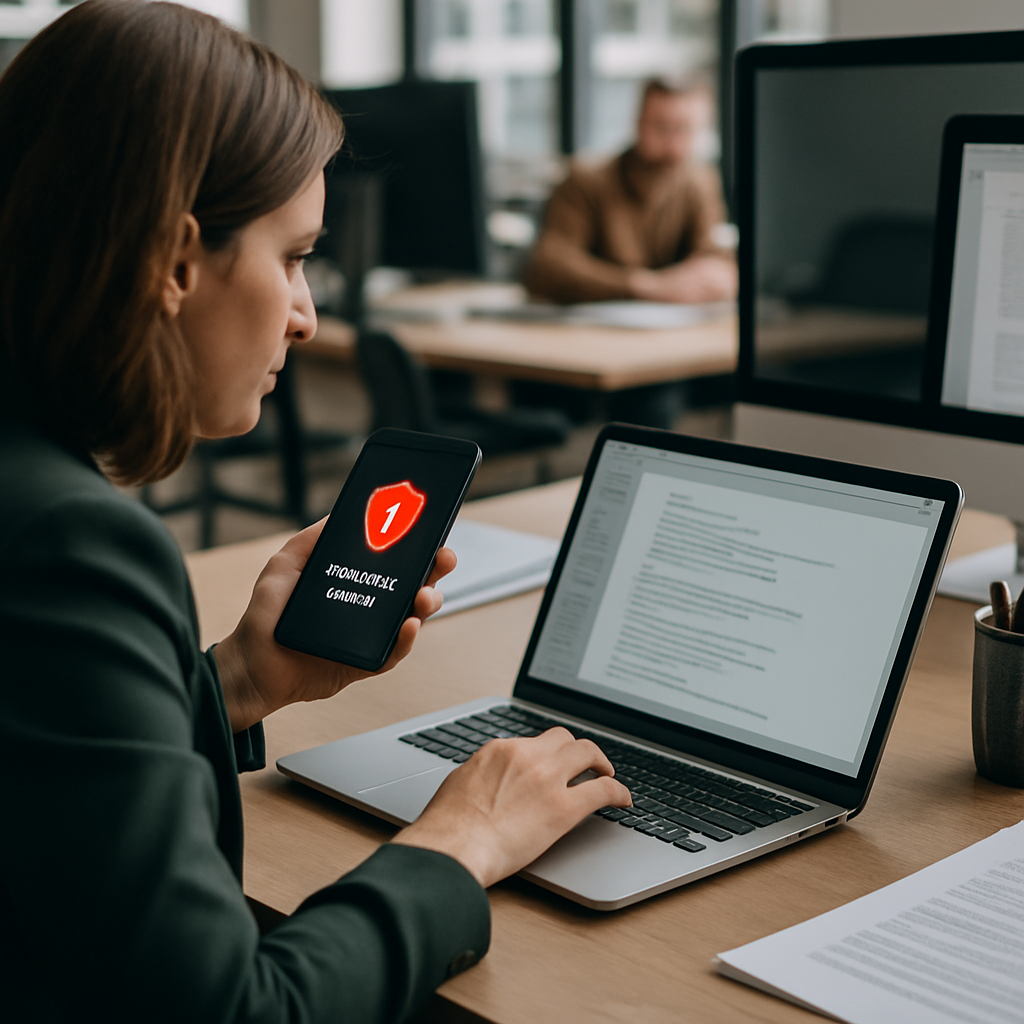
Law firms are a phishing goldmine, and phishing prevention is no longer a nice-to-have line item on the IT budget. Attorneys hold wire instructions, settlement funds, sealed filings, and client secrets that criminals will happily pay six figures to grab. That mix makes even a small firm a bigger target than most mid-sized retailers.
The tricky part? Lawyers are busy, deadlines are brutal, and one distracted click on a fake court notice can undo years of trust. So let’s talk about what actually works in 2026, not the recycled advice from five years ago.
Why Law Firms Keep Getting Hit
Attackers know the rhythm of a legal practice. They watch for public docket entries, court filing deadlines, and even LinkedIn posts announcing new partners. Then they craft an email that sounds exactly like something you’d expect on a Tuesday afternoon.
The FBI’s Internet Crime Complaint Center still ranks business email compromise as one of the most expensive cybercrimes reported year after year, and legal services sit near the top of the target list. Wire fraud tied to real estate closings alone costs the industry hundreds of millions annually.
So phishing prevention for lawyers has to be different. It needs to match how a firm actually operates, not how a generic corporate SOC operates. Below are seven wins I’ve watched work in real practices, from three-attorney boutiques to 200-lawyer regional firms.
1. Lock Down Email Authentication Before Anything Else
If your domain doesn’t have properly enforced SPF, DKIM, and DMARC records, everything else you do is theater. Attackers can spoof your managing partner’s address in minutes, and Outlook will happily deliver it.
Set DMARC to p=reject once you’ve cleaned up your legitimate sending sources. Yes, it takes a few weeks of monitoring reports. No, you can’t skip it. This single move blocks a huge chunk of impersonation attempts before a paralegal ever sees them.
Also enforce this for every subdomain, including the ones marketing spun up for that webinar three years ago and forgot about. Phishing prevention starts with your own house being airtight.
2. Train Attorneys Like They’re the Actual Target (Because They Are)
Generic annual security videos don’t stick. Attorneys tune out when the training talks about "Nigerian prince" emails or shows screenshots that clearly aren’t legal-industry relevant.
Instead, run quarterly simulations built around real legal scenarios. Fake opposing counsel emails with a booby-trapped "amended complaint." Fake court clerk notices about a filing rejection. Fake title company wire updates the day before closing.
When someone clicks, don’t shame them. Give a 90-second coaching moment, log the pattern, and move on. Firms that treat phishing prevention as continuous coaching (not a compliance box) cut click rates from around 25% down to under 5% within a year.
3. Mandate Phishing-Resistant MFA Everywhere
SMS codes are done. Push notifications get approved reflexively at 4 p.m. on a Friday. In 2026, the standard is phishing-resistant MFA, meaning FIDO2 security keys or platform passkeys.
Yubikeys cost about the price of a decent lunch per attorney. Compared to the average legal breach cost, that math isn’t close. Roll them out for email, document management (NetDocuments, iManage), practice management, and your VPN.
If you’re modernizing your infrastructure anyway, this fits neatly into a broader plan. Firms adopting a multi-cloud strategy for smarter enterprises often bake phishing-resistant MFA into every identity provider from day one, which is exactly the right time to do it.
4. Build a Wire Verification Ritual Nobody Skips
This is the single biggest financial loss category for law firms, and it’s almost entirely preventable. Real estate practices, trust accounts, and settlement disbursements get hit constantly.
Create a callback rule: any wire instruction change (new account, new bank, new beneficiary, even a "small correction") triggers a phone call to a number pulled from your own client intake file, not the number in the email. Ever. No exceptions for the managing partner, no exceptions for the closing scheduled in 20 minutes.
Print the rule. Frame it above the accounting team’s desk. When someone tries to pressure a staffer to skip the callback, that pressure itself is the red flag. Good phishing prevention isn’t just tech, it’s ritual.
5. Segment Your Document Management and Trust Accounts
If a phishing email compromises one paralegal’s credentials, the blast radius should be tiny. Not "read every matter in the firm" tiny, but "read only their assigned matters" tiny.
Use role-based access in your DMS. Separate trust account access from operating account access. Require step-up authentication for any bulk download or export. Log everything, and actually review the logs weekly (or have a managed provider do it).
This is where firms benefit from the same segmentation thinking that retail uses. The playbook in ransomware defense wins for retail stores translates almost directly: assume breach, contain damage, monitor lateral movement.
6. Deploy Modern Email Security With AI Detection
Traditional secure email gateways catch known-bad. They miss the tailored spear-phish written by a criminal who spent a week reading your firm’s public filings. That’s where AI-driven email security earns its keep.
Tools like Abnormal, Material Security, or Microsoft Defender for Office 365 (properly tuned) look at behavior, not just content. They notice when "your managing partner" suddenly emails from a login in Lagos, or when a vendor’s writing style shifts overnight.
Tune the aggressiveness quarterly. Review the quarantine with real humans. And integrate with your SIEM so a suspicious email correlates with a suspicious login attempt on the same account. That kind of correlation is where actual phishing prevention lives, not in any single tool.
7. Have a Playbook for the Click That Will Happen
Someone will click. Accept it now, because pretending otherwise is how firms end up on the front page of the state bar journal. What separates the firms that recover quietly from the ones that don’t is a written, rehearsed incident response plan.
Your playbook needs: who to call first (usually your MSP or IR retainer), how to isolate the compromised mailbox in under 10 minutes, how to reset credentials and revoke sessions, how to notify clients per your state’s ethics rules, and how to preserve evidence for potential law enforcement referral.
Tabletop it twice a year with actual partners in the room. Not IT alone. When a real incident hits at 11 p.m., you don’t want the first conversation about client notification to happen in a panic.
Where Phishing Prevention Fits in the Bigger Picture
Solo IT consultants sometimes sell phishing prevention as its own product. It isn’t. It’s a layer inside a broader security posture that includes patching, backups, endpoint detection, and vendor risk management.
For smaller firms without a full security team, this is where an outside partner earns their fee. The same logic behind IT outsourcing wins for smarter manufacturing applies to legal: specialized threats need specialized defenders, and hiring one internally rarely pencils out under 100 attorneys.
Also, don’t forget your website. Fake "attorney portal" login pages are a common pivot. Make sure your public site uses proper HSTS, that your client portal has strong session management, and that anything client-facing gets penetration tested at least annually.
A Realistic 90-Day Rollout
Week 1 to 2: Audit DMARC, SPF, DKIM. Get to p=quarantine at minimum.
Week 3 to 6: Roll out FIDO2 keys to partners and accounting first, then everyone else.
Week 7 to 8: Launch the wire verification ritual with signed acknowledgments from every staff member handling funds.
Week 9 to 10: Stand up simulated phishing with legal-specific templates.
Week 11 to 12: Tabletop the incident response plan with the leadership team.
That’s it. Not glamorous, not exotic, but it stops probably 95% of what’s coming at you.
Wrapping Up
Phishing prevention for law firms in 2026 comes down to boring discipline done consistently. Authenticate your email, kill password-only logins, verify every wire by phone, segment your data, use AI-aware filters, train your people with realistic scenarios, and rehearse the day something slips through. That’s the whole game.
The firms getting breached this year aren’t the ones with weaker technology. They’re the ones who assumed phishing prevention was a project they finished in 2022. Make it a habit, not a project, and you’ll sleep a lot better through the next filing deadline.
References
- FBI Internet Crime Complaint Center (IC3) Annual Reports: https://www.ic3.gov/
- CISA Phishing Guidance: https://www.cisa.gov/topics/cyber-threats-and-advisories/phishing
- ABA Cybersecurity Handbook, current edition
- NIST SP 800-63B Digital Identity Guidelines
- DMARC.org Deployment Guides

