
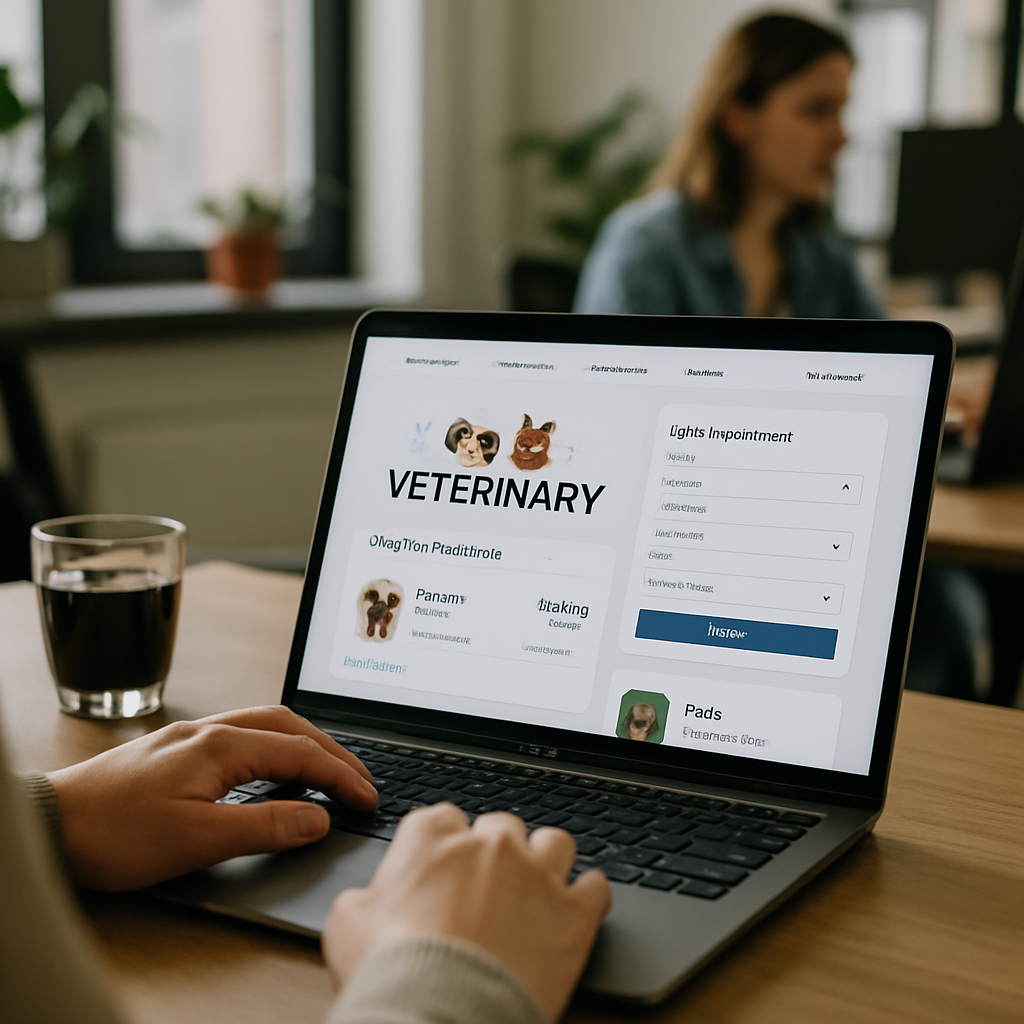
A modern veterinary web portal is no longer a "nice to have" for clinics that want to stay full. It’s the front door. Pet owners now research vets the same way they research pediatricians, and if your booking flow feels clunky, they move on to the next clinic with a cleaner site.
The good news? You don’t need a Silicon Valley budget to compete. You need the right features, built with actual pet owners in mind, glued together with sensible UX. Here are nine that consistently move the needle for the clinics we work with.
1. Real-Time Online Booking That Actually Reflects Availability
The single most important feature of a veterinary web portal is a booking widget that shows real slots, not a "we’ll call you back" form. Pet owners book vet appointments at 10 PM after their dog throws up on the rug. If your portal makes them wait until Monday, they’ll pick someone else.
Tie the booking calendar directly to your practice management software (ezyVet, Cornerstone, AVImark, Provet). When Dr. Kim’s 3 PM opens up, the portal should know within seconds.
2. Species and Reason-of-Visit Filtering
A cat with a limp needs a different vet than a rabbit with GI stasis. Let owners filter by species, by concern (wellness, dental, dermatology, exotic), and by doctor. This isn’t just UX polish. It reduces mis-booked appointments, which are pure profit leaks for a busy clinic.
I’ve seen clinics reclaim four to six hours a week just by adding a "reason for visit" dropdown that routes to the right template. That’s a full appointment block, back on the schedule.
3. Pet Profile and Medical Record Access
Give every household its own pet profile. Vaccine history, weight trends, allergies, prescription refills, past invoices. When owners see their own data respected inside your veterinary web portal, they trust the clinic more, and they’re far less likely to shop around.
This is also where you win the "we moved from another vet" crowd. Let them upload prior records during signup. The frictionless onboarding here mirrors what great SaaS products do, and we’ve written about that in our breakdown of onboarding UX wins that drive SaaS signups.
4. Automated Reminders and Two-Way Messaging
Missed appointments are the silent killer of small vet practices. A good veterinary web portal handles reminders via SMS, email, and push, then lets owners confirm or reschedule with one tap. No phone tag.
Two-way messaging is the underrated part. Owners want to send a photo of the weird lump on Charlie’s ear before they commit to a visit. If your portal supports that (even if triaged by a tech), you’ll book more of those hesitant clients.
5. Telemedicine and Video Consult Integration
Post-2020, telemedicine stuck around, especially for follow-ups, behavior questions, and end-of-life discussions. Your veterinary web portal should offer video visits as a bookable service with its own pricing and consent flow.
Use HIPAA-adjacent tools built for veterinary use (like Televet or Airvet) rather than plain Zoom. Owners notice the difference, and so do the state veterinary boards that are starting to regulate this space.
6. Prescription Refills and Online Pharmacy
Chewy quietly ate a huge chunk of vet pharmacy revenue over the last decade. You get some of it back by making refills inside your veterinary web portal genuinely painless.
One form. Auto-approval for stable patients. Home delivery or in-clinic pickup. Add heartworm and flea prevention subscriptions and you’ve built a recurring revenue stream that also improves compliance. Owners who autopay for Simparica don’t forget doses. Their pets stay healthier. You keep the margin.
7. Transparent Pricing and Estimate Builder
Vet care is expensive, and the number one complaint online is "I had no idea what it would cost." A veterinary web portal that shows base pricing for common services (exam, spay, dental, radiographs) removes that anxiety before the client even calls.
For bigger cases, an interactive estimate builder is gold. Owner picks the services, sees the range, decides. The clinics using this tell me their case acceptance rates jump noticeably, especially for dentals and mass removals where sticker shock kills conversions.
8. Client Loyalty, Referrals, and Wellness Plans
Wellness plans (monthly membership for exams, vaccines, bloodwork) are the smartest recurring revenue play in veterinary medicine right now. Your portal should let owners enroll, upgrade, and manage billing without calling the desk.
Layer in a referral program too. "Refer a friend, get $25 off your next visit" is a tiny incentive that quietly builds your book. This is the same loyalty logic we broke down for beauty businesses in our post on salon booking app features that drive client retention, and the mechanics translate almost perfectly to vet clinics.
9. SEO-Ready Content Hub and Local Search Signals
Your veterinary web portal isn’t just a transactional tool. It’s your best salesperson on Google. Publish a blog with real answers to real questions: "Why is my cat sneezing blood?", "How much does a dog dental really cost in Austin?", "Signs of a UTI in senior dogs."
Add schema markup for LocalBusiness and VeterinaryCare. Optimize the Google Business Profile. Get reviews inside the portal after every visit, then push them to Google. If you’re curious how content-driven SEO plays out in adjacent healthcare niches, our writeup on Instagram Reels tactics for dental leads covers similar principles that map cleanly to vet marketing.
What Great Veterinary Web Portal UX Actually Looks Like
Here’s the honest part. You can bolt all nine features onto a mediocre site and still lose bookings, because owners abandon slow, ugly, confusing portals in about eight seconds.
A few UX rules that matter more than the feature list itself:
- Mobile first. Over 70% of vet bookings now happen on phones. If your calendar needs pinch-zooming, you’ve lost.
- Three-tap booking. Home page to confirmed appointment in three taps or fewer. Count them.
- Visible phone number. Not every owner wants to book online. Never bury the phone.
- Emergency banner. If you’re closed, or full, or referring to the ER, say so at the top. Owners appreciate honesty.
- Real photos of your team. Stock photos of golden retrievers on white backgrounds are invisible. Show Dr. Patel with an actual patient.
Common Mistakes Clinics Make Building These Portals
The biggest one? Buying an off-the-shelf portal from a practice management vendor and calling it done. Those tools work, but they’re identical across thousands of clinics. Your portal should feel like your clinic, not a template.
The second mistake is skipping analytics. Install Google Analytics 4, Microsoft Clarity, or Hotjar. Watch where owners drop off. Fix that spot. Repeat. Most clinics have never once watched a session recording of a real client trying to book, and it shows.
Third: ignoring accessibility. About one in four adults has some form of disability. Contrast, alt text, keyboard navigation, screen reader labels. These aren’t optional in 2026, and lawsuits under the ADA are real. Your veterinary web portal needs to meet WCAG 2.1 AA at minimum.
Rolling It Out Without Breaking Your Clinic
You don’t launch all nine features at once. That’s how projects die.
Start with booking and reminders. Get those humming for 30 days. Then add pet profiles and telemedicine. Then pricing and refills. Then loyalty and content. Phase it. Measure each launch. Train the front desk on what changed so they can help clients who call in confused.
Budget-wise, a solid custom veterinary web portal runs anywhere from $18,000 to $75,000 depending on integrations, telemedicine, and payment processing. Ongoing hosting, support, and content updates typically land between $400 and $1,500 a month. Cheaper is possible with templates, but you’ll cap out on differentiation.
Closing Thought
A well-built veterinary web portal pays for itself, usually within the first year, through reduced no-shows, higher case acceptance, wellness plan enrollments, and pharmacy retention. Pet owners want the same digital experience they get from their bank, their airline, and their food delivery app. Give them that, and they’ll pick your clinic over the one down the street that still uses a paper appointment book.
Start with two features this quarter. Ship them well. The rest builds from there.
References
- American Veterinary Medical Association, Telehealth and Telemedicine in Veterinary Practice
- AAHA, 2024 State of the Industry Report
- W3C, Web Content Accessibility Guidelines (WCAG) 2.1
- Google, Local Business Structured Data Guide

