
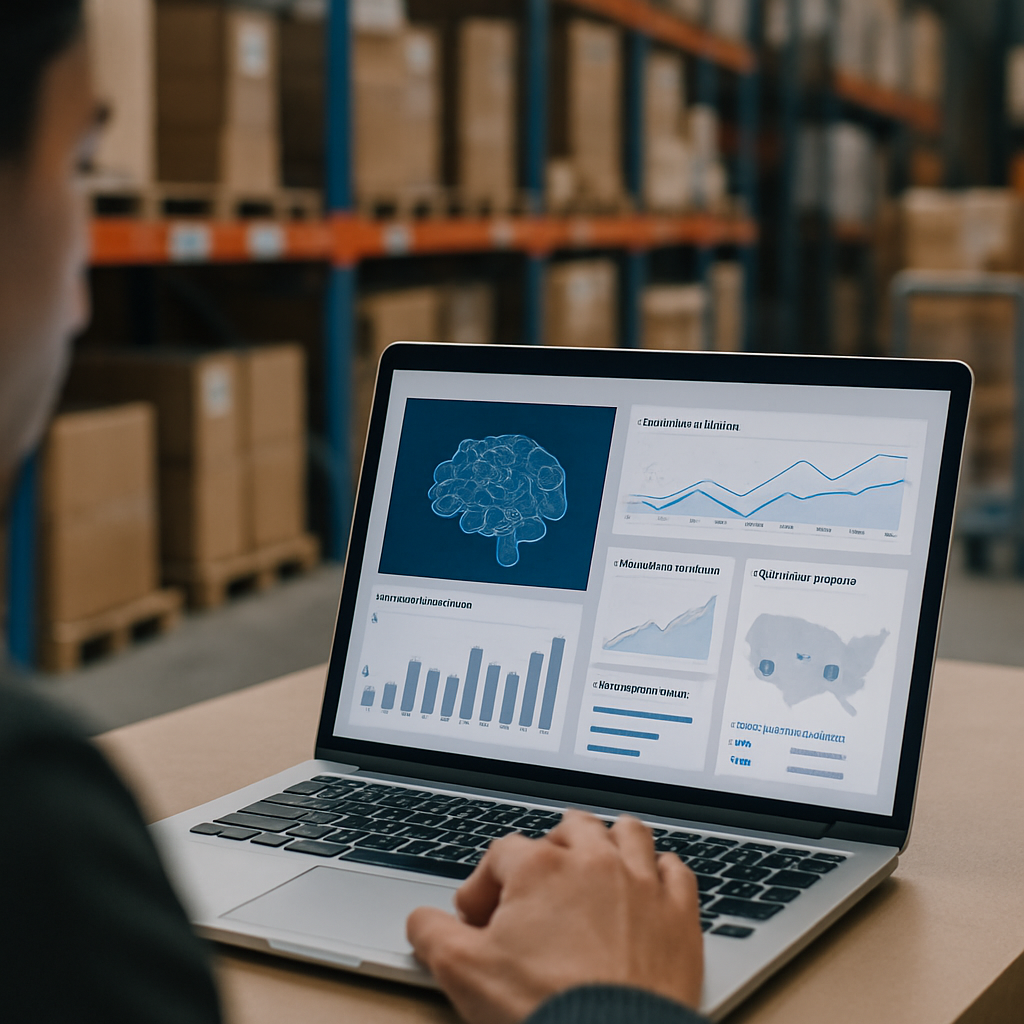
Retailers who switched to AI inventory management in the last two years are quietly running circles around competitors still glued to spreadsheets and gut instinct. The gap is wider than most owners realize. While one shop is reordering coffee filters by hand every Friday, another is letting algorithms reorder, reroute, and even renegotiate with suppliers automatically.
I have been watching this shift up close, talking to small boutique owners, grocery chains, and a couple of regional pharmacy groups. The pattern is the same. Whoever adopts AI inventory management first stops bleeding cash on overstock and dead SKUs within a quarter or two. Here are seven wins that keep showing up in the data, plus the practical stuff most blog posts skip.
Why AI Inventory Management Beats the Old Way
Traditional inventory systems are reactive. You run out, you reorder. You overbuy, you discount. AI inventory management flips that into something predictive, where the system watches sales velocity, weather, local events, supplier delays, and even social media buzz before deciding what to do next.
A friend who runs three pet supply stores in the Midwest told me her shrinkage dropped 38% in eight months. She wasn’t doing anything heroic. She just stopped guessing.
The tech behind this is not magic. It is mostly time-series forecasting, computer vision for shelf scanning, and reinforcement learning for reorder timing. What matters is how those pieces fit your workflow, not the buzzwords on the vendor’s homepage.
Win 1: Demand Forecasting That Actually Learns
Forecasting used to mean pulling last year’s numbers and adding 10%. Modern AI inventory management tools look at 40 plus signals at once, including local school calendars, payday cycles, and competitor promotions.
A bakery I worked with reduced morning waste by 52% after the model learned that rainy Tuesdays drop croissant demand but spike soup bread sales. No human would have spotted that pattern across two years of receipts.
The accuracy compounds. Every week of new sales data sharpens the next prediction. According to a McKinsey report on AI in retail, companies using AI forecasting see inventory reductions of 20 to 30%.
Win 2: Dynamic Reorder Points, Not Static Min/Max
Static reorder points are the silent killer of working capital. You set a minimum once, then forget it. Meanwhile, demand shifts, your supplier’s lead times stretch, and you are either drowning in stock or out of the hot item.
AI inventory management adjusts reorder points daily, sometimes hourly. For a regional grocery client, this single change freed up roughly $180,000 in cash that had been sitting on shelves as canned goods.
The system also factors in supplier reliability scores. If your distributor has been late three times this month, the AI pads the safety stock without anyone asking.
Win 3: Shelf Vision That Catches Empty Spots in Seconds
Computer vision cameras now watch shelves the way a good floor manager would, except they never blink. When a row gets thin, the system pings someone to restock. When a price tag is wrong or a product is misplaced, it flags that too.
This pairs beautifully with mobile apps for staff. If you are already thinking about workflow apps, our piece on e-commerce checkout UX wins covers similar UX principles that apply to internal store tools.
The ROI here is interesting because empty shelves do not just lose one sale. Customers who see two empties in a row often abandon the whole basket.
Win 4: Supplier Negotiation Powered by Data
This is the win nobody talks about, and it might be the biggest. AI inventory management gives you receipts. Literally. When you sit down with a supplier and say "your average lead time slipped from 4 to 9 days in Q1," you negotiate from a different position.
Some platforms now run those negotiations through automated RFQ workflows. The AI compares quotes from three suppliers, accounts for historical defect rates, and recommends the best total cost option, not just the lowest sticker price.
I have seen small retailers shave 6 to 11% off cost of goods this way. That margin goes straight to the bottom line.
Win 5: Smarter Markdown Timing
Discounting too early kills margin. Discounting too late means clearance racks full of stuff nobody wants. AI inventory management watches sell-through rates and recommends when, how much, and which SKUs to mark down.
A clothing boutique I consulted with used to do blanket 30% off sales at end of season. The AI suggested staggered markdowns starting at 10%, only on slow movers, two weeks earlier. Total seasonal revenue went up 14%.
The system also learns from your customers. If your shoppers respond better to "buy one get one" than percentage off, future recommendations lean that direction.
Win 6: Multi-Location Balancing Without the Headaches
If you run more than one location, you know the pain. Store A is out of a hot item, Store B has 47 of them collecting dust. AI inventory management runs constant transfer recommendations based on real demand at each location.
This is also where cloud infrastructure starts to matter. Real-time inventory across locations needs serious backend muscle, which is why I usually point retailers toward our breakdown on multi-cloud strategy wins for resilience before they pick a platform.
Done right, transfers happen before either store notices the imbalance. The customer just sees a well-stocked shelf.
Win 7: Fraud and Shrinkage Detection
Shrinkage is a $112 billion problem in US retail alone. AI inventory management combines POS data, video analytics, and inventory counts to flag patterns that humans miss. Sweethearting at the register, repeat refund abuse, suspicious adjustments after hours.
This overlaps with the broader fraud space. If that side interests you, our piece on AI fraud detection wins for fintech covers the same underlying anomaly detection models applied to a different industry.
For a hardware chain client, the system caught a return scam that had been running for 14 months. Total recovered: $61,000.
How Local Businesses Can Start Without Breaking the Bank
You do not need an enterprise budget to use AI inventory management. A small dental supply distributor, a corner pharmacy, a three-table restaurant, all of them can start with off-the-shelf tools like Lightspeed, Cin7, or Zoho Inventory, which now bake in AI forecasting.
If you are running a more specialized operation, custom builds make sense. A KuerySoft team recently shipped an AI inventory layer for a regional auto parts retailer that integrates with their existing POS. The build paid for itself in five months through reduced overstock alone.
Start small. Pick your top 50 SKUs by revenue. Get clean data flowing for 60 days. Then let the AI run recommendations in shadow mode before you trust it with reorders.
Common Mistakes to Skip
Most retailers who fail at this make one of three errors. They feed the AI dirty data and expect miracles. They automate too fast, before staff trust the system. Or they buy a platform without integrating it with their POS, which leaves the AI flying blind.
Clean your SKU master file first. Boring, I know. But every successful AI inventory management rollout I have seen started there.
Also, do not skip staff training. If your store manager does not understand why the system suggested ordering 80 cases of orange juice in February, they will override it, and the model never learns.
The Bottom Line
AI inventory management is not the future anymore. It is the present, and the retailers who treat it like a 2028 problem will spend 2026 watching margins shrink. Pick one win from this list, the one closest to your biggest pain, and start there.
Whether that is forecasting, shelf vision, or supplier negotiation, the math works out the same. Less cash tied up in stock, fewer angry customers staring at empty shelves, and more time for you to actually run the business. That is what good AI inventory management delivers when you set it up right.
References
- McKinsey & Company, "AI in Retail: Insights and Trends", https://www.mckinsey.com/industries/retail/our-insights
- National Retail Federation, "Retail Security Survey", https://nrf.com/research/national-retail-security-survey
- Gartner, "Supply Chain Technology Trends 2026", https://www.gartner.com/en/supply-chain
- Deloitte, "AI in Retail and Consumer Products", https://www2.deloitte.com/us/en/industries/retail-distribution.html

